English
 Português
 Español

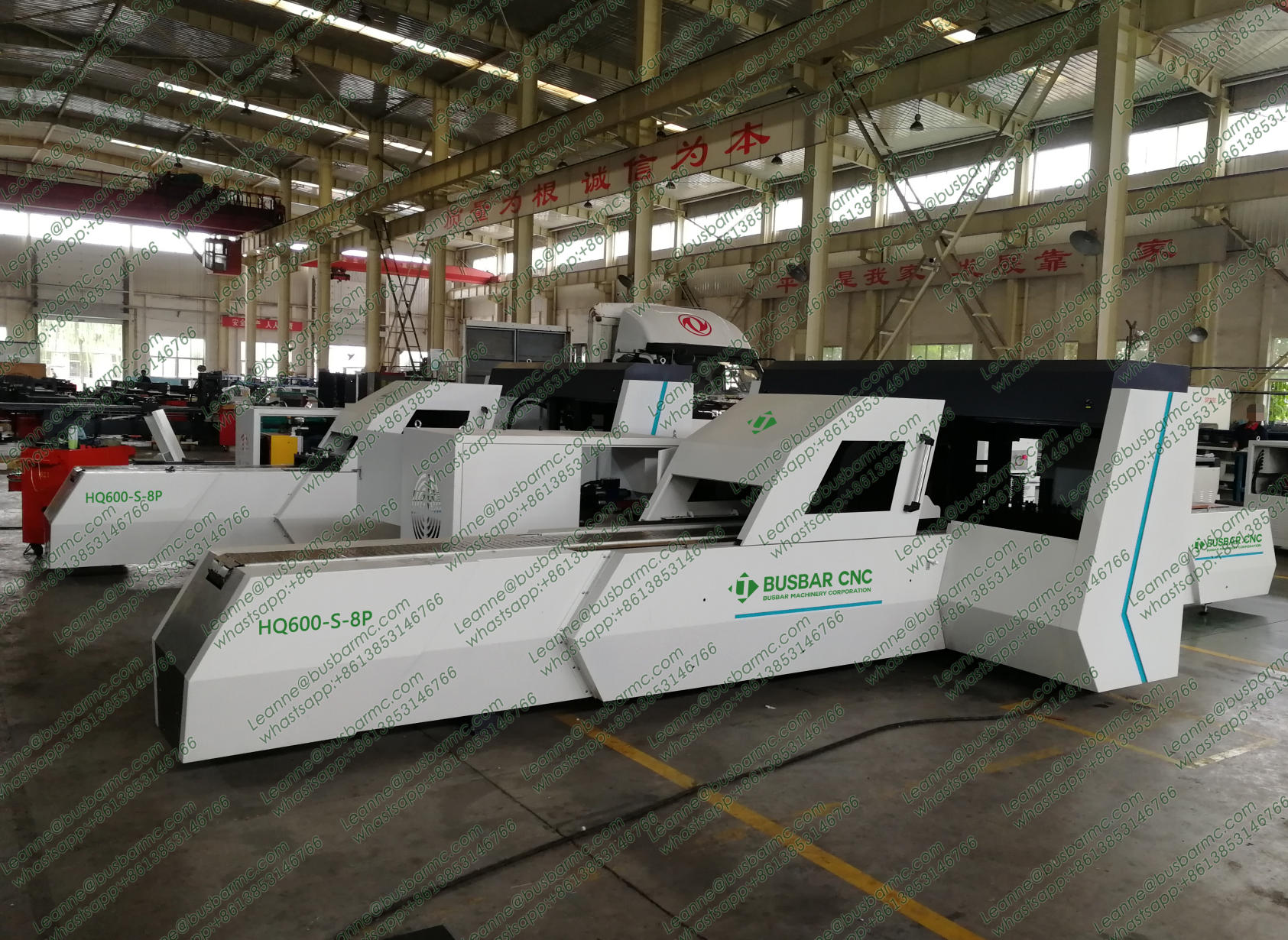
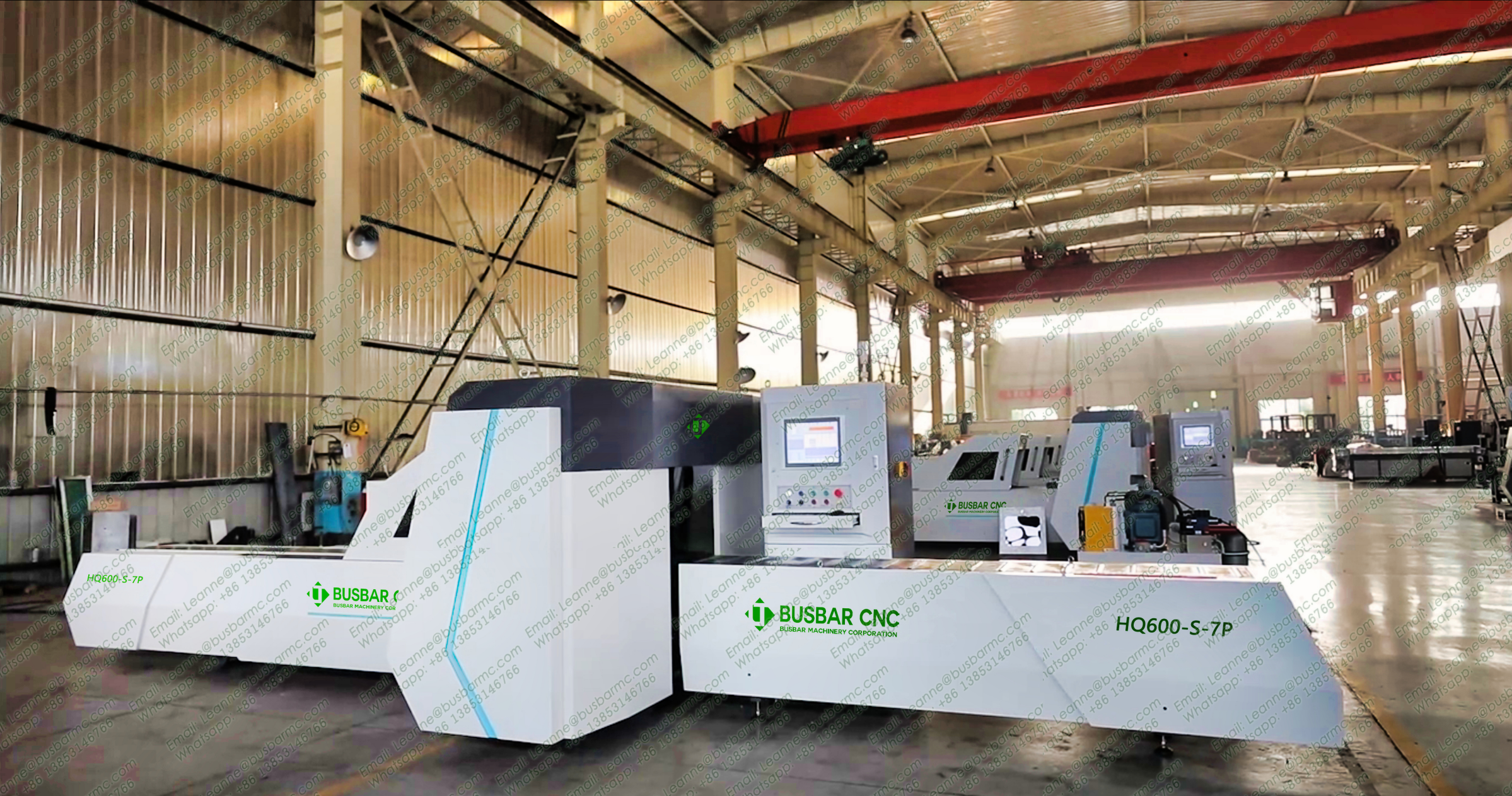
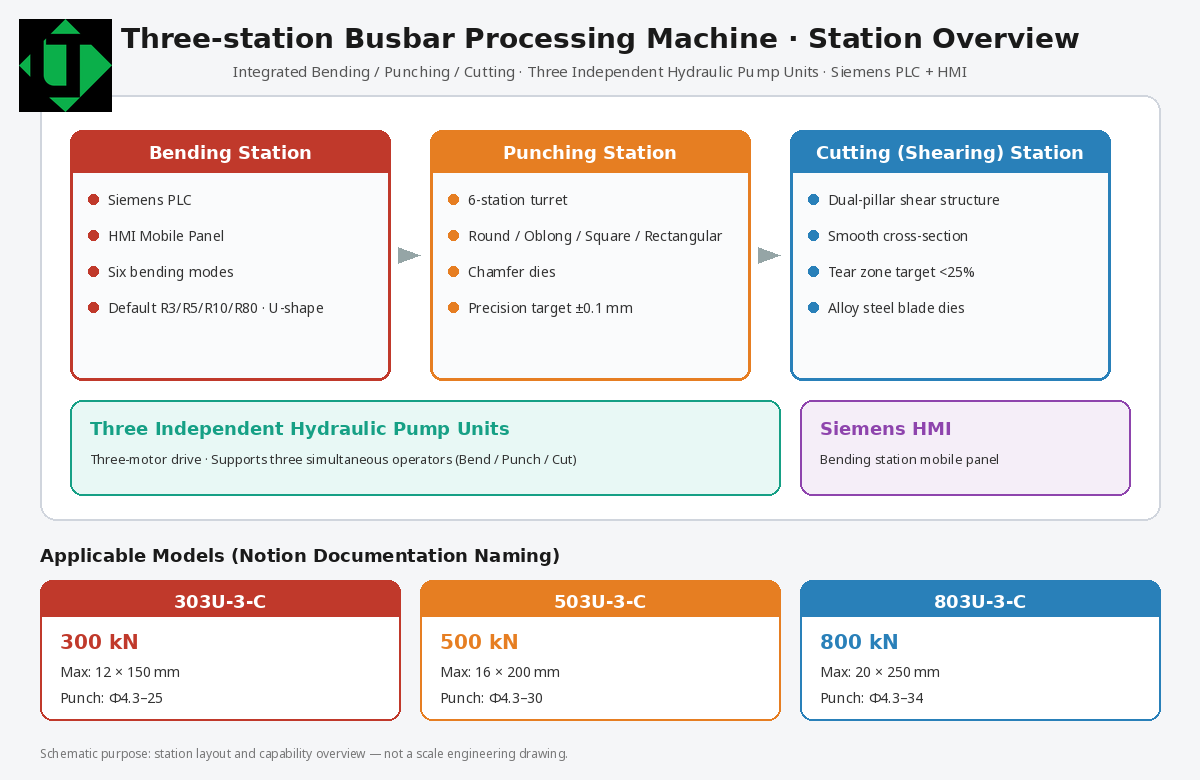
Quick answer: a busbar bending machine works by placing the flat against a stop or datum, selecting the radius die and applying a hydraulic stroke controlled by the HMI or PLC. The programmed angle is not the finished angle: copper or aluminum springback must be compensated and measured on the first article. In Argentine switchboard fabrication, that station is usually part of an LT 303U-3-C, 503U-3-C or 803U-3-C 3-in-1.
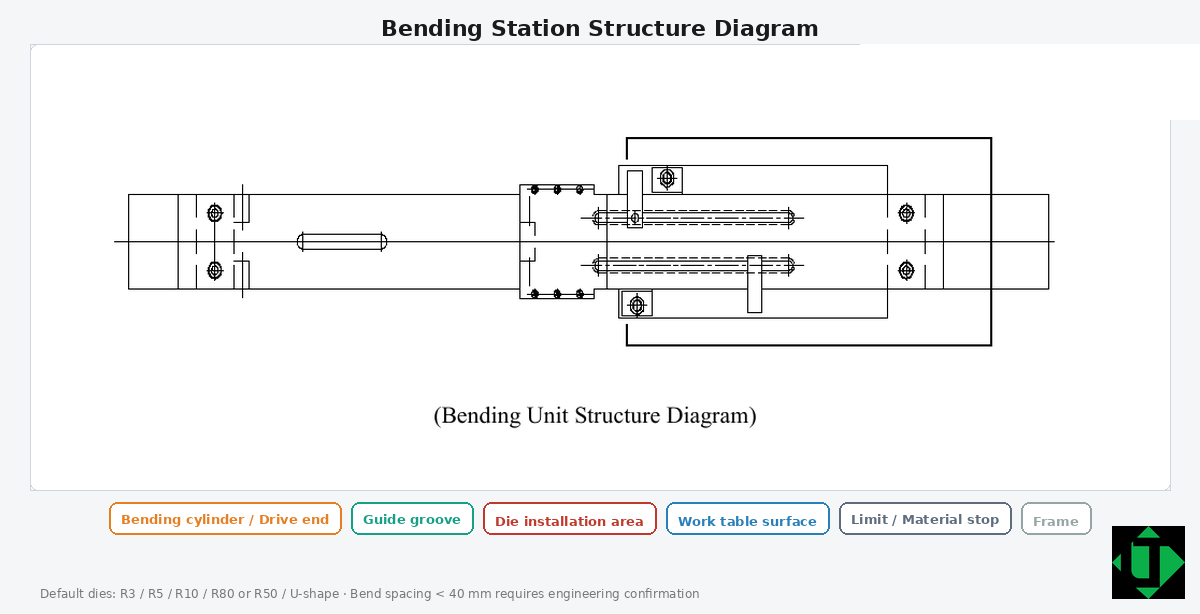
The cycle of a bend
- The bar is set on the table and aligned with the drawing’s bend line.
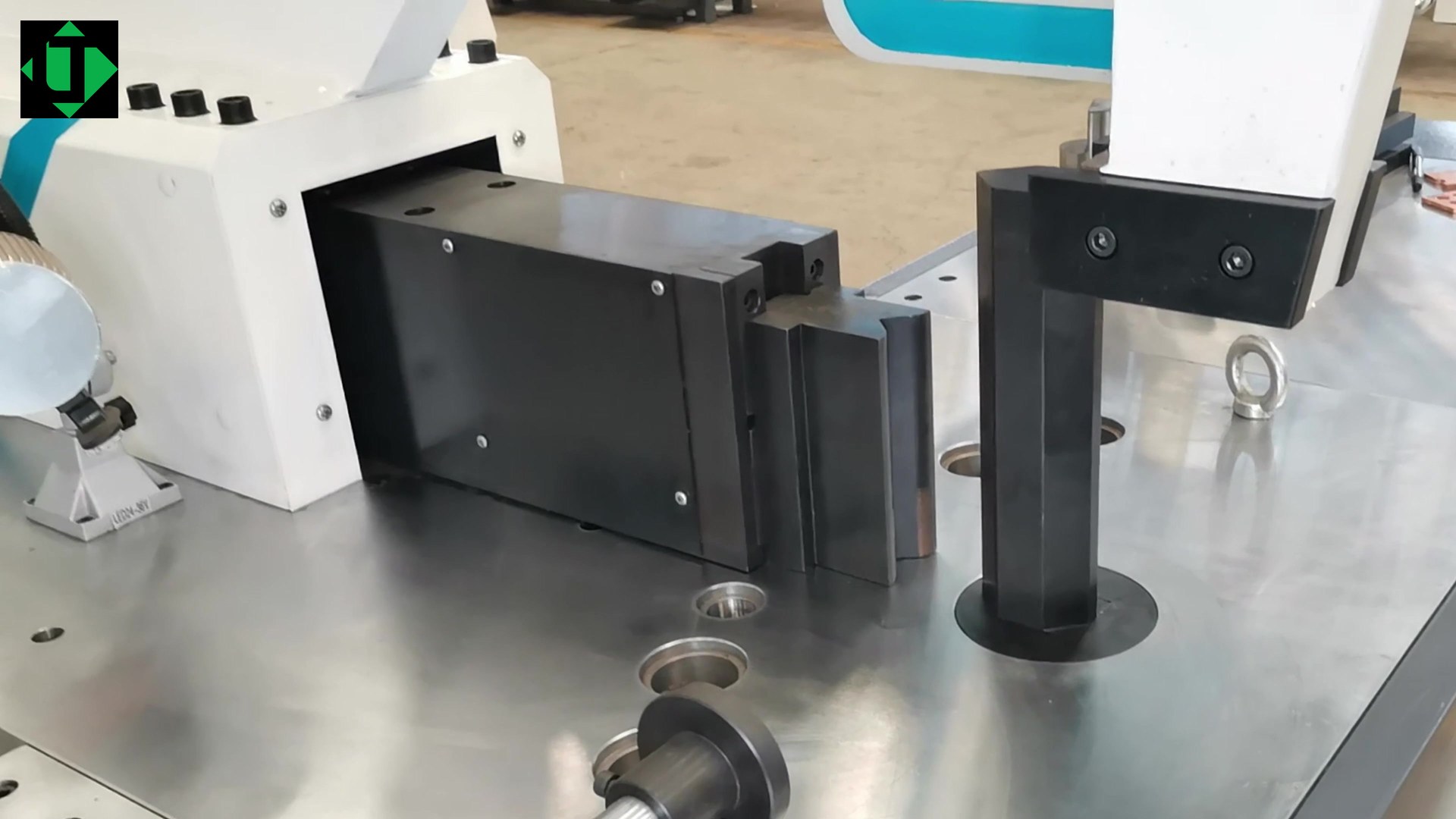
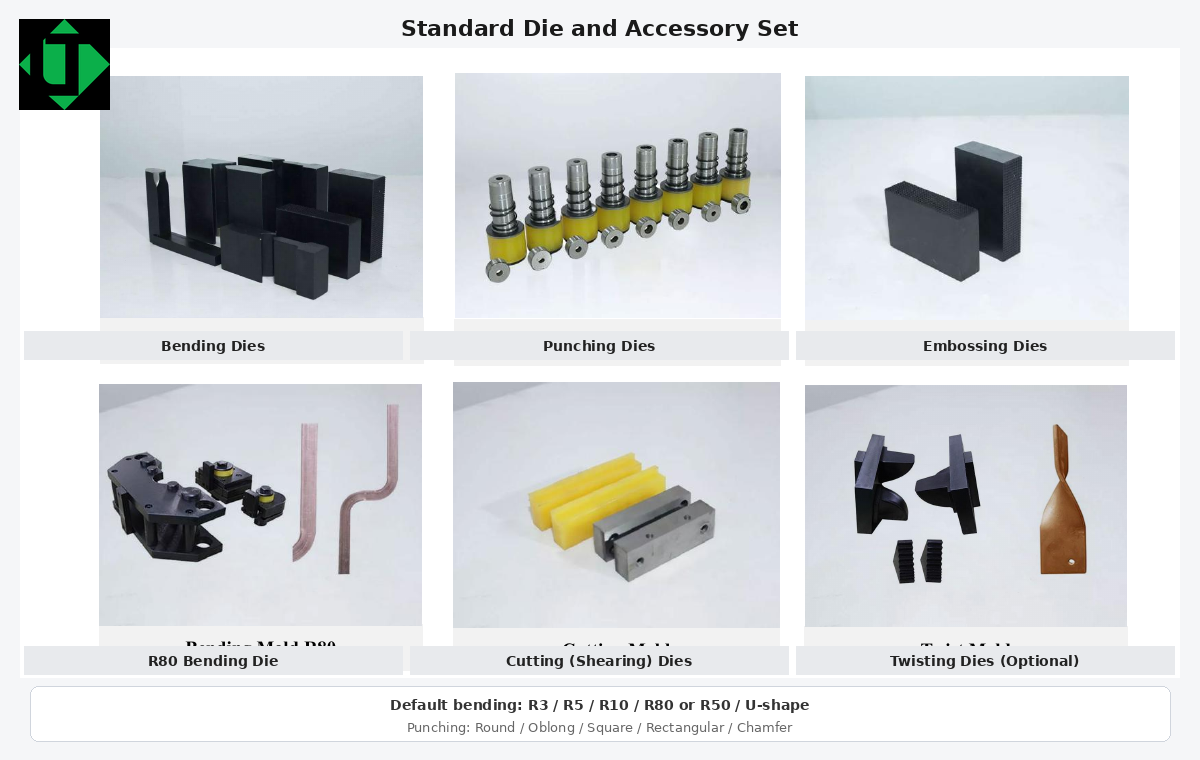
- The die is selected (R3, R5, R10, R80 or R50, or a U-die) according to radius and thickness.
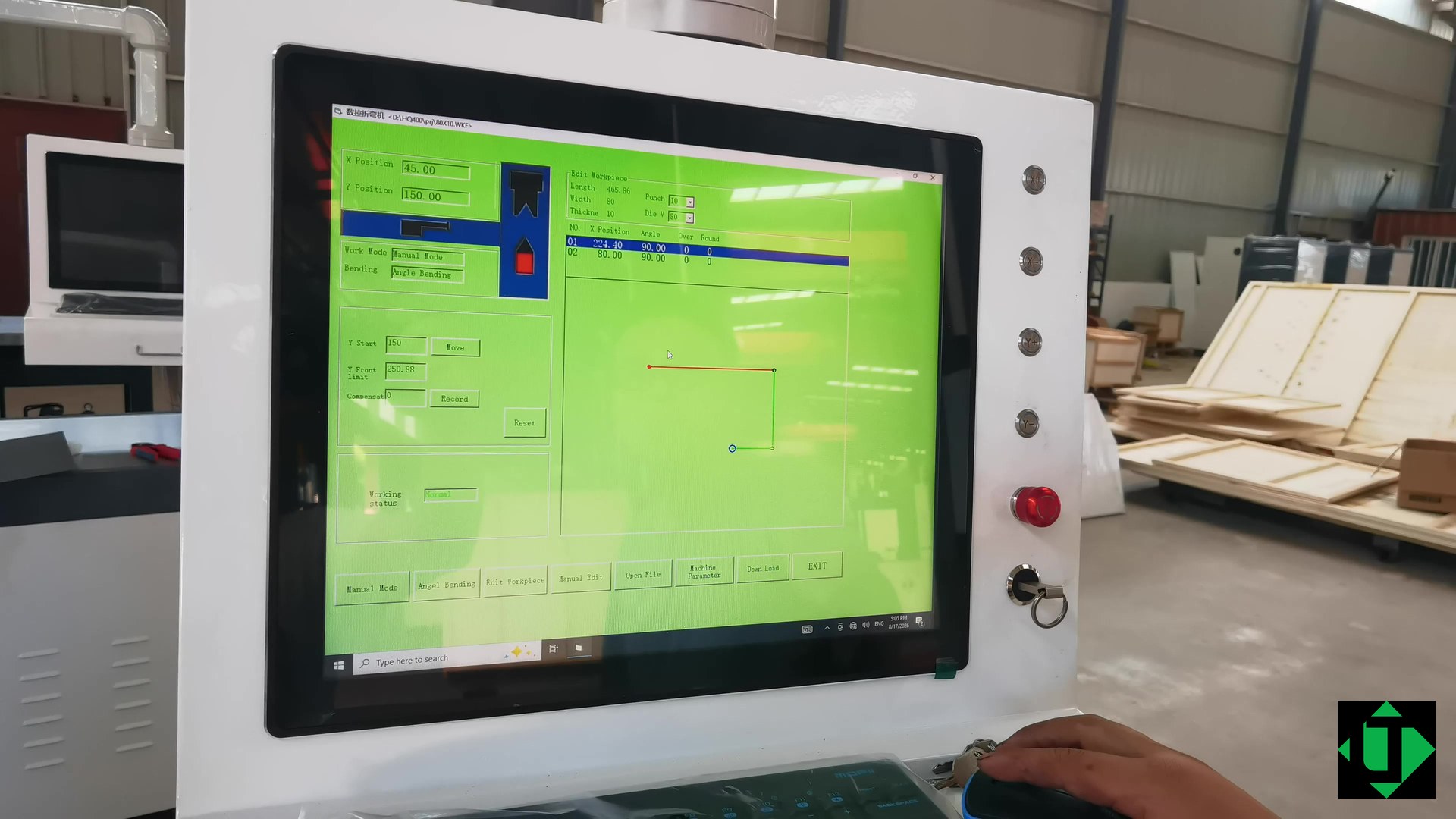
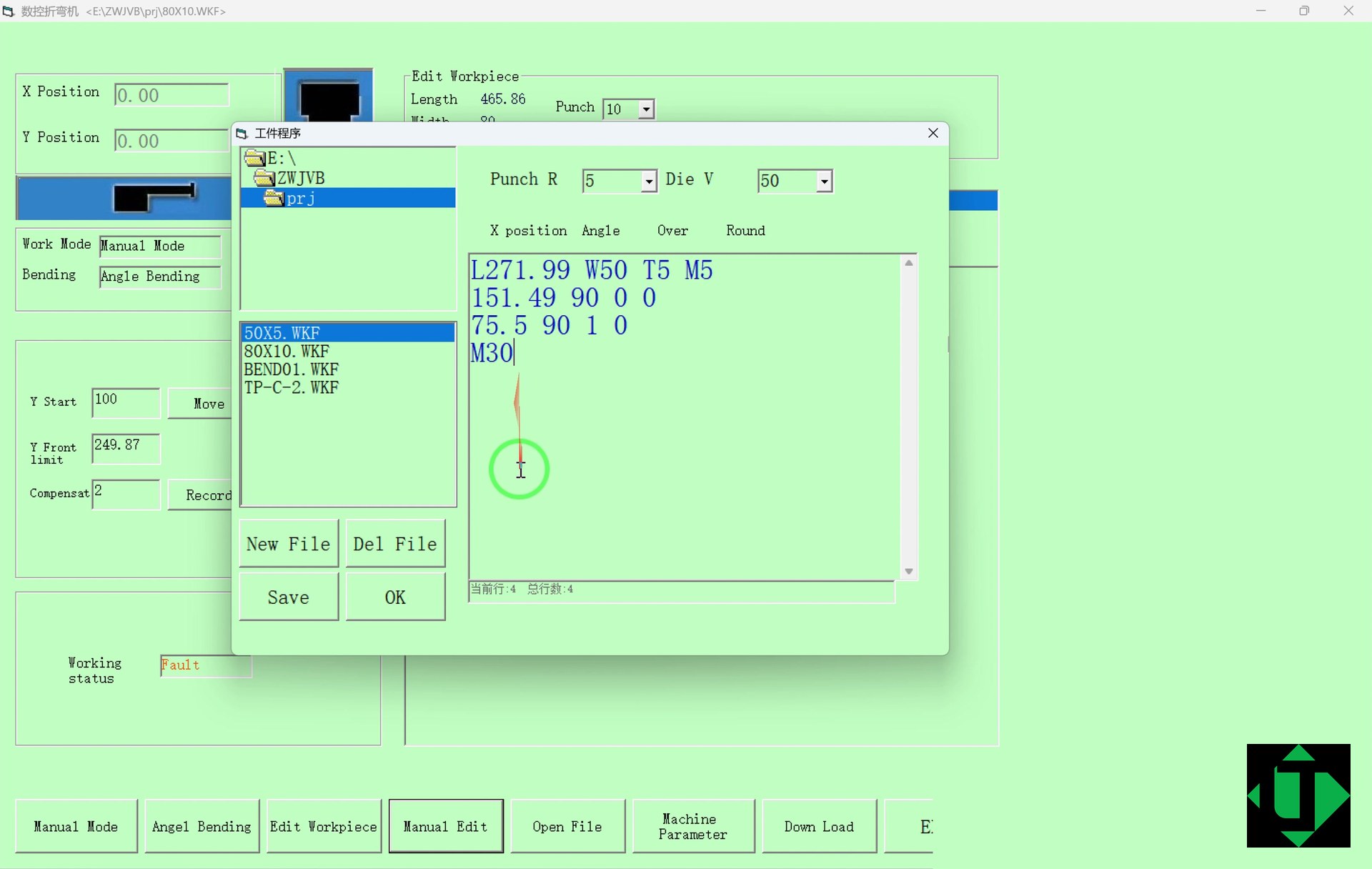
- The HMI applies automatic mode (length, thickness, angle) or a limited stroke in manual mode.
- The press closes, forms the bend and opens; the operator removes the part and measures the released angle.
- If needed, springback compensation is adjusted and confirmed on a second part.
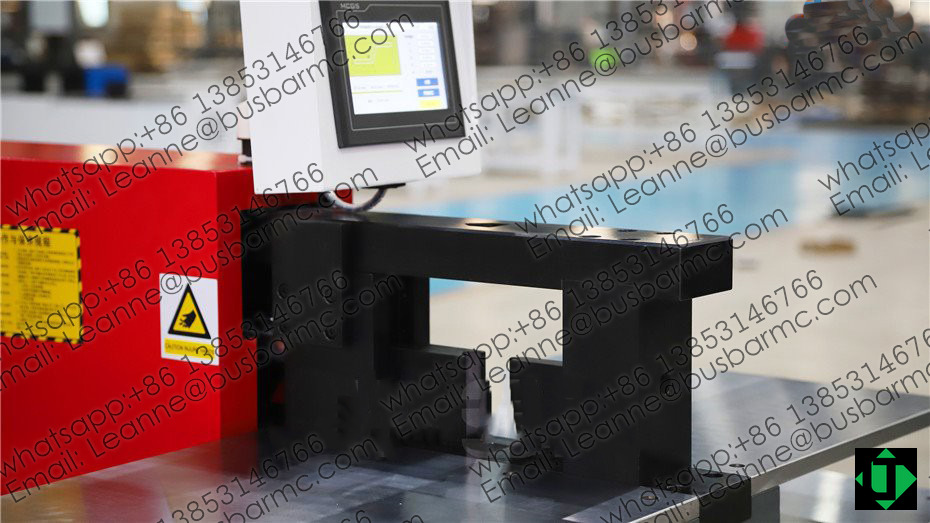
Workshop operating sequence
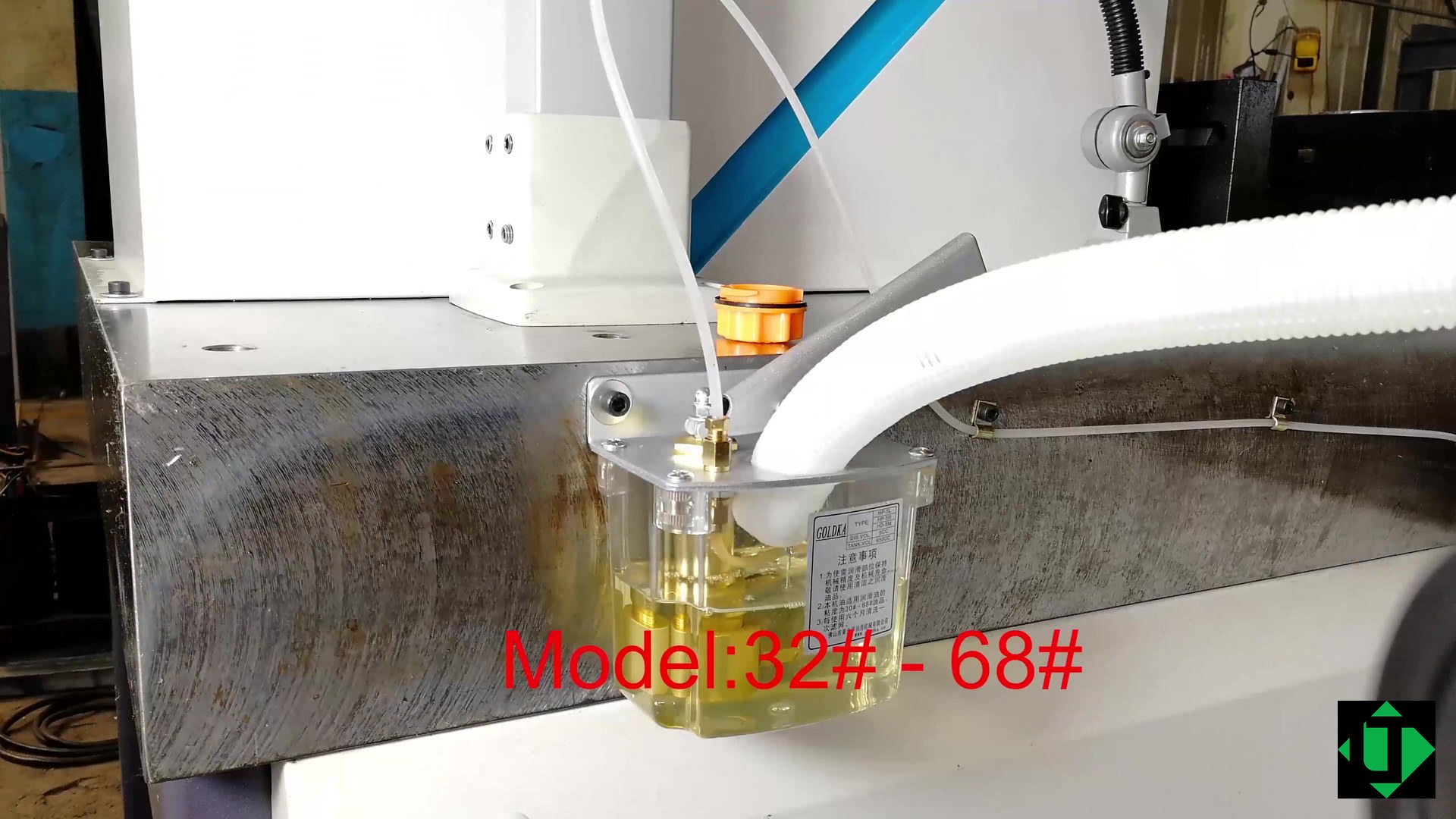
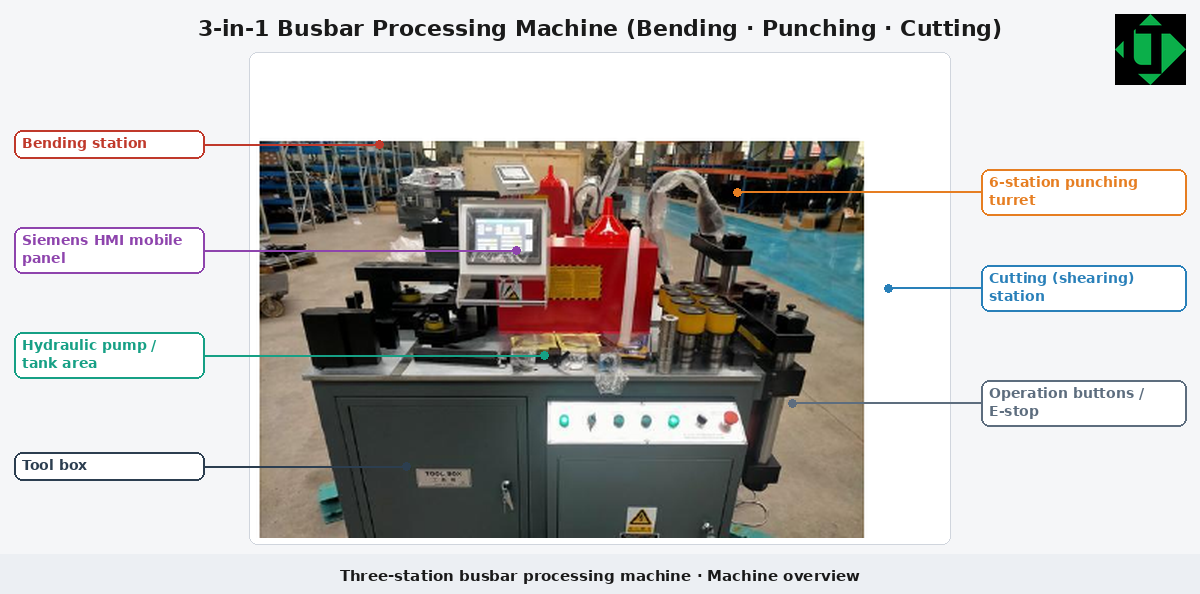
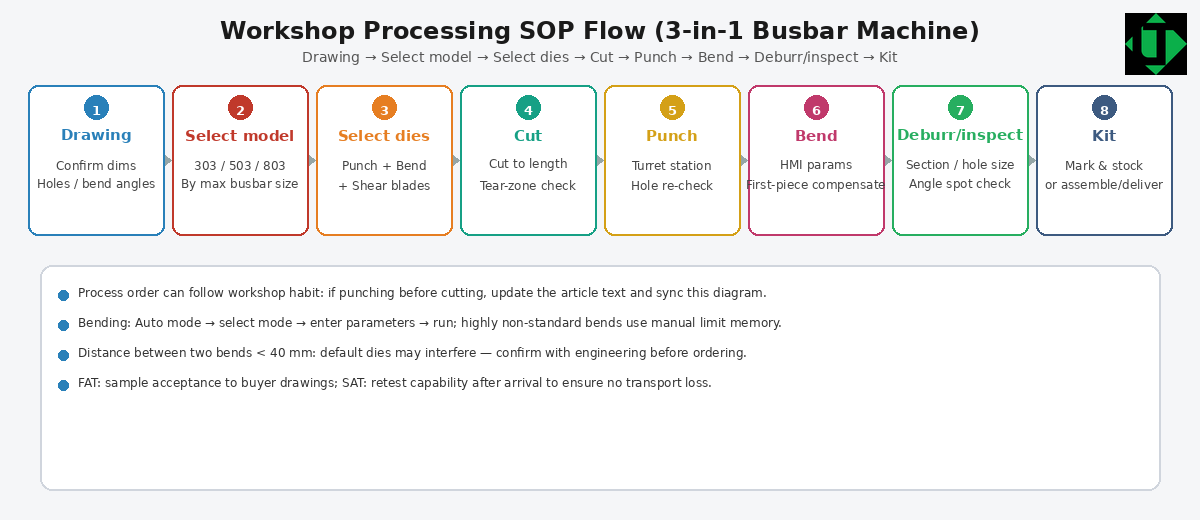
On the shop floor, the bending station is prepared and operated in this order: lubrication and electrical supply, die installation, CNC power-on, programming (manual edit, template or data import), angle compensation, limits and starting position, foot-switch bending, and finally emergency-stop recovery and periodic maintenance.
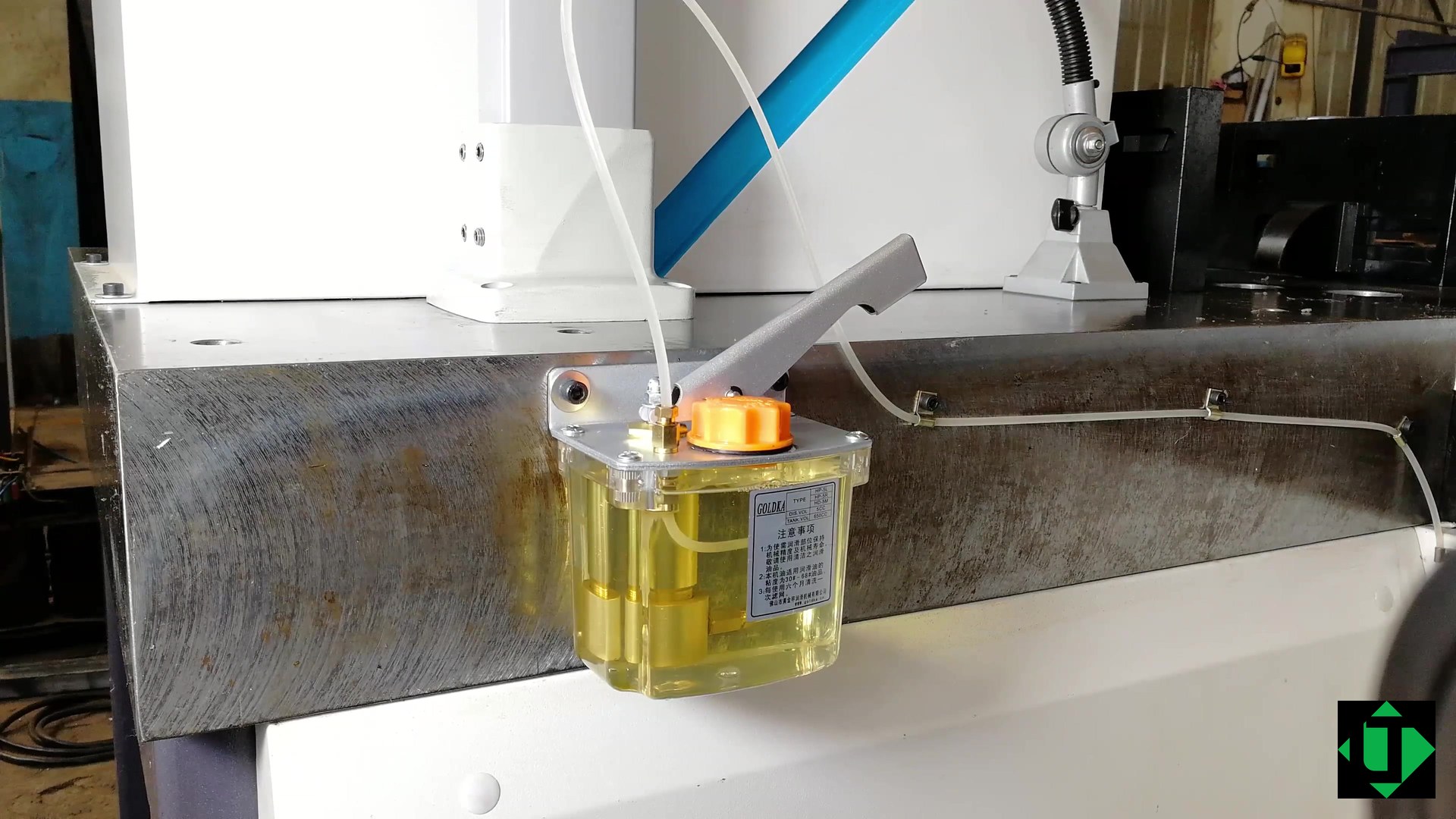
Lubrication and power-cord installation
Die set installation
Power-on and CNC interface
Manual editing of the bend program
Template graphic editing
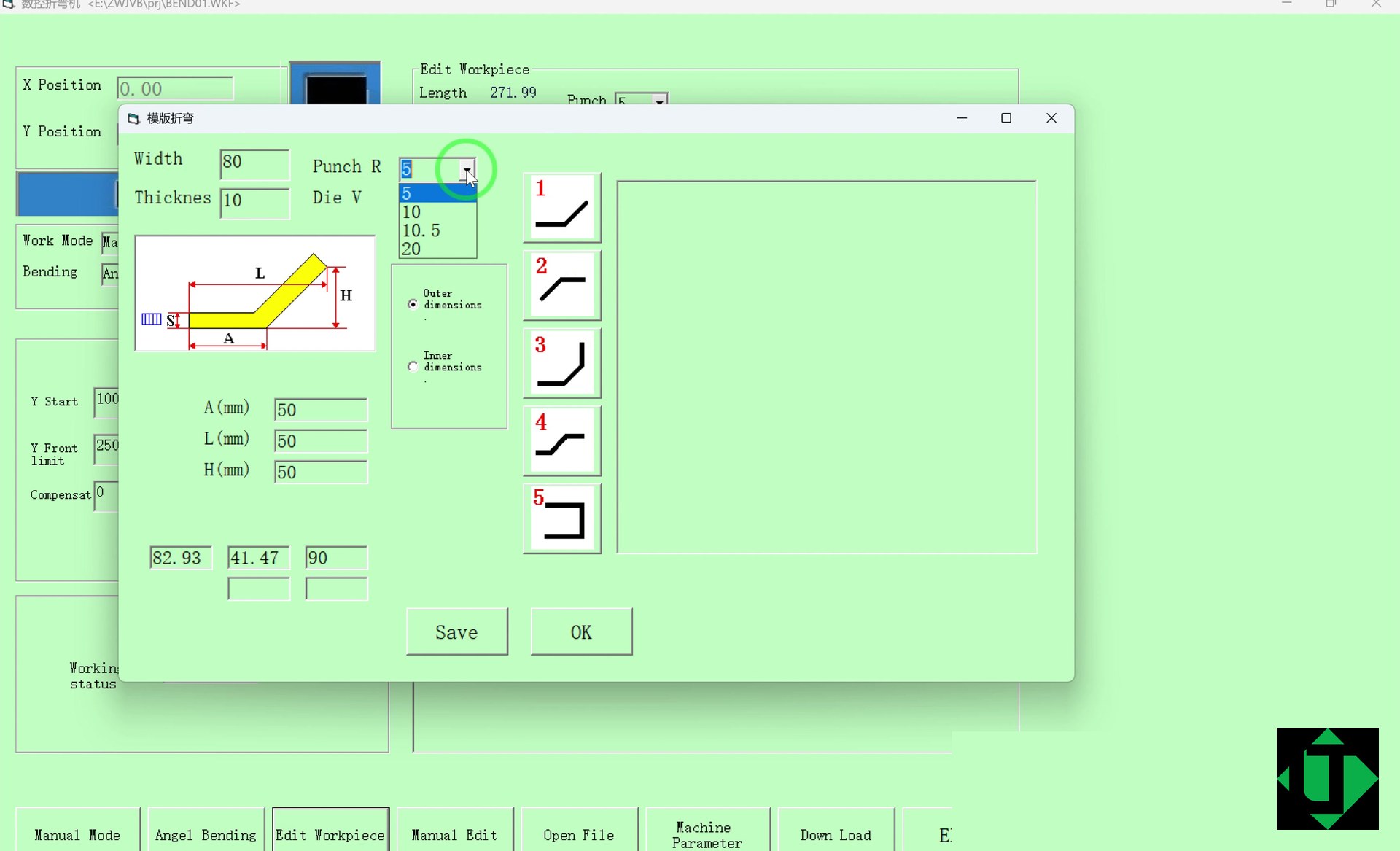
Data import into the bend program
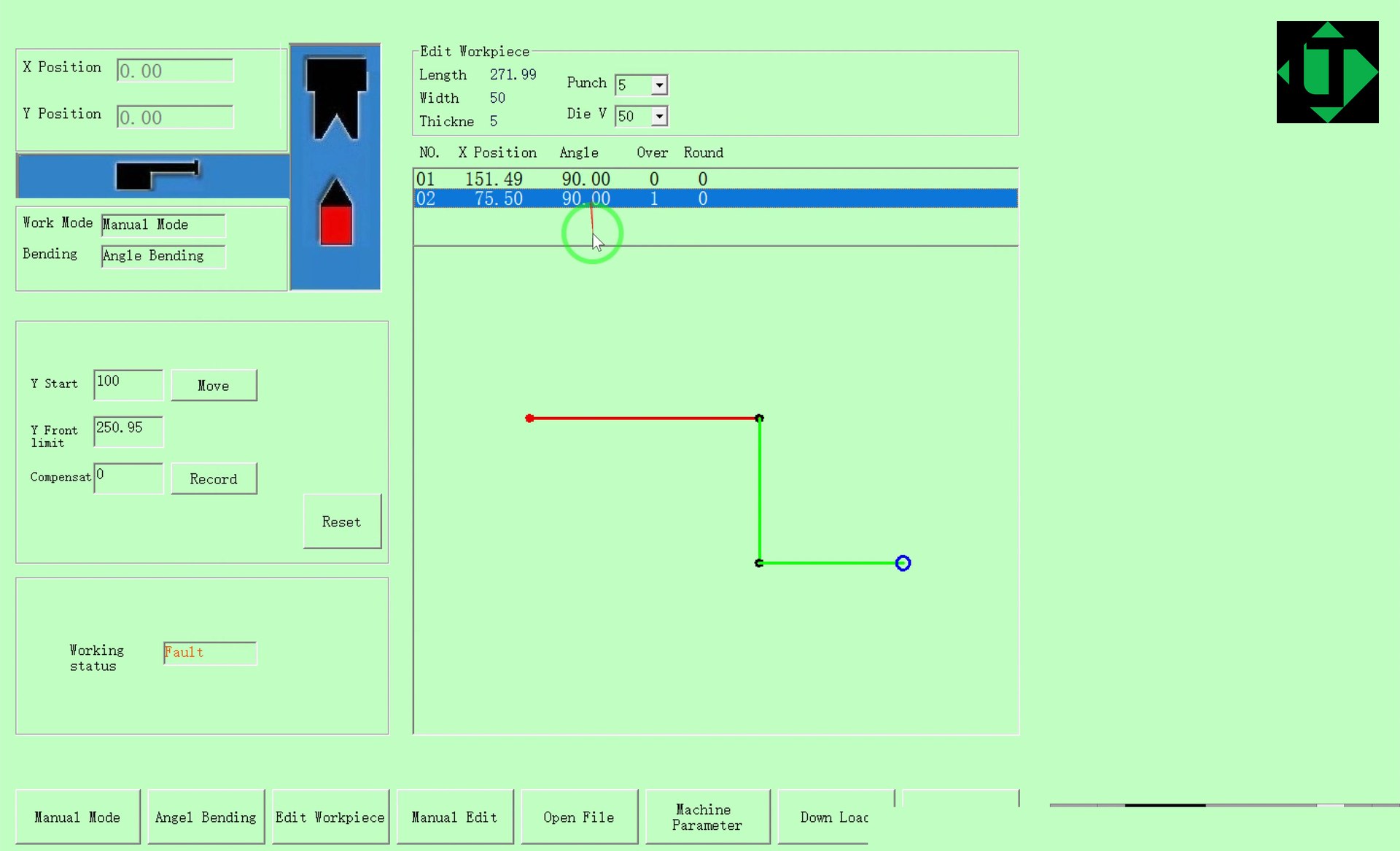
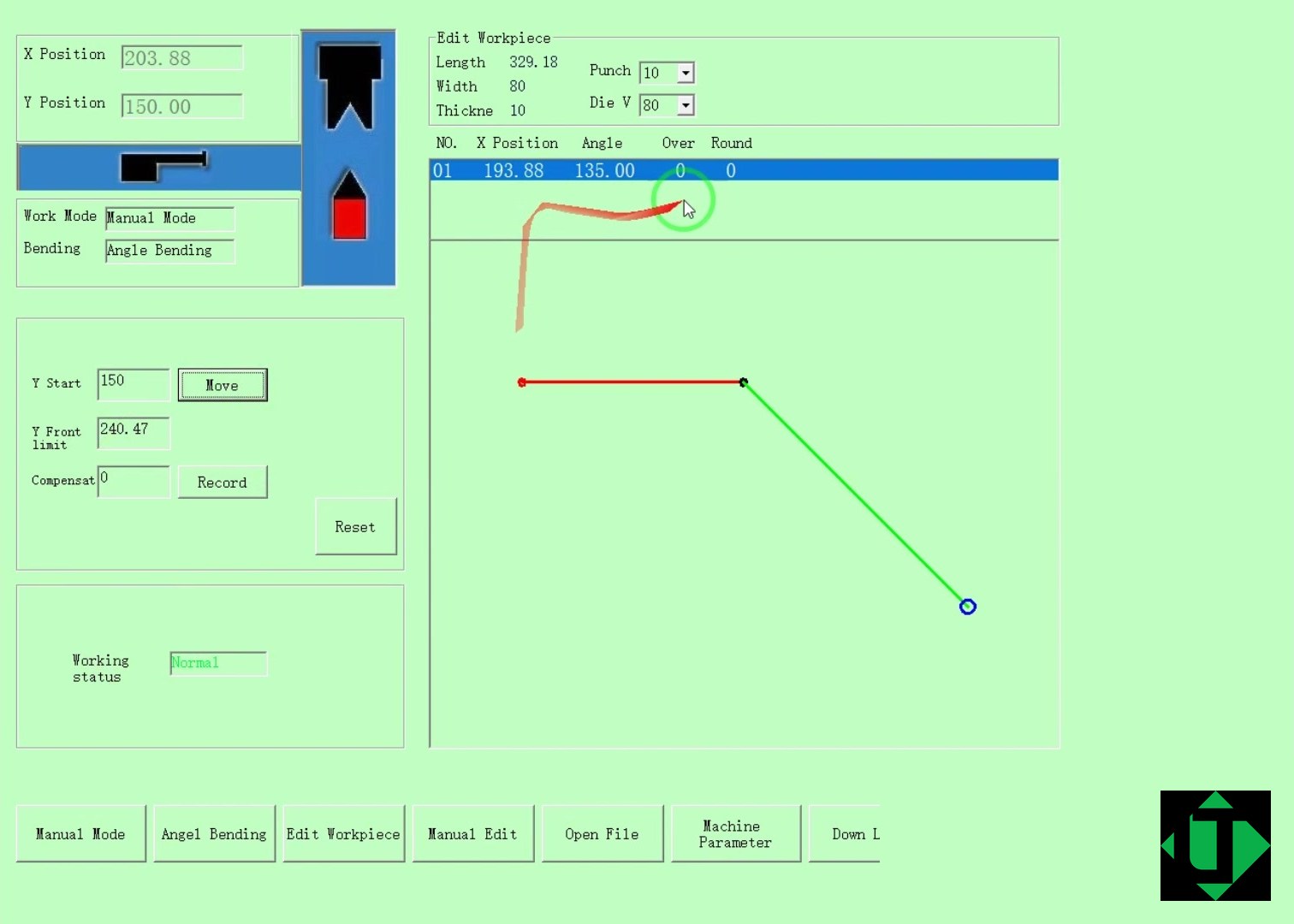
Angle compensation for springback
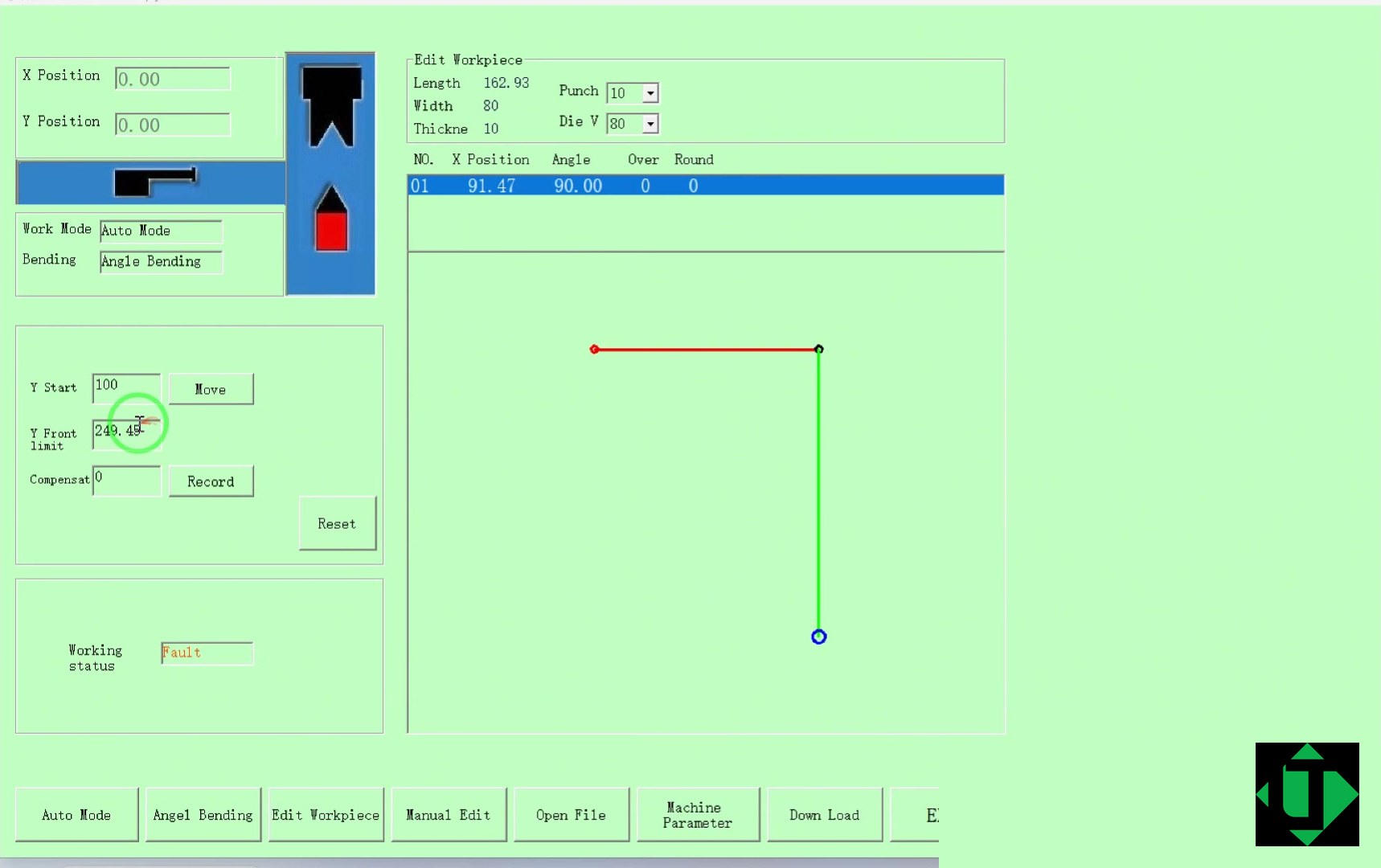
Limited bending mode
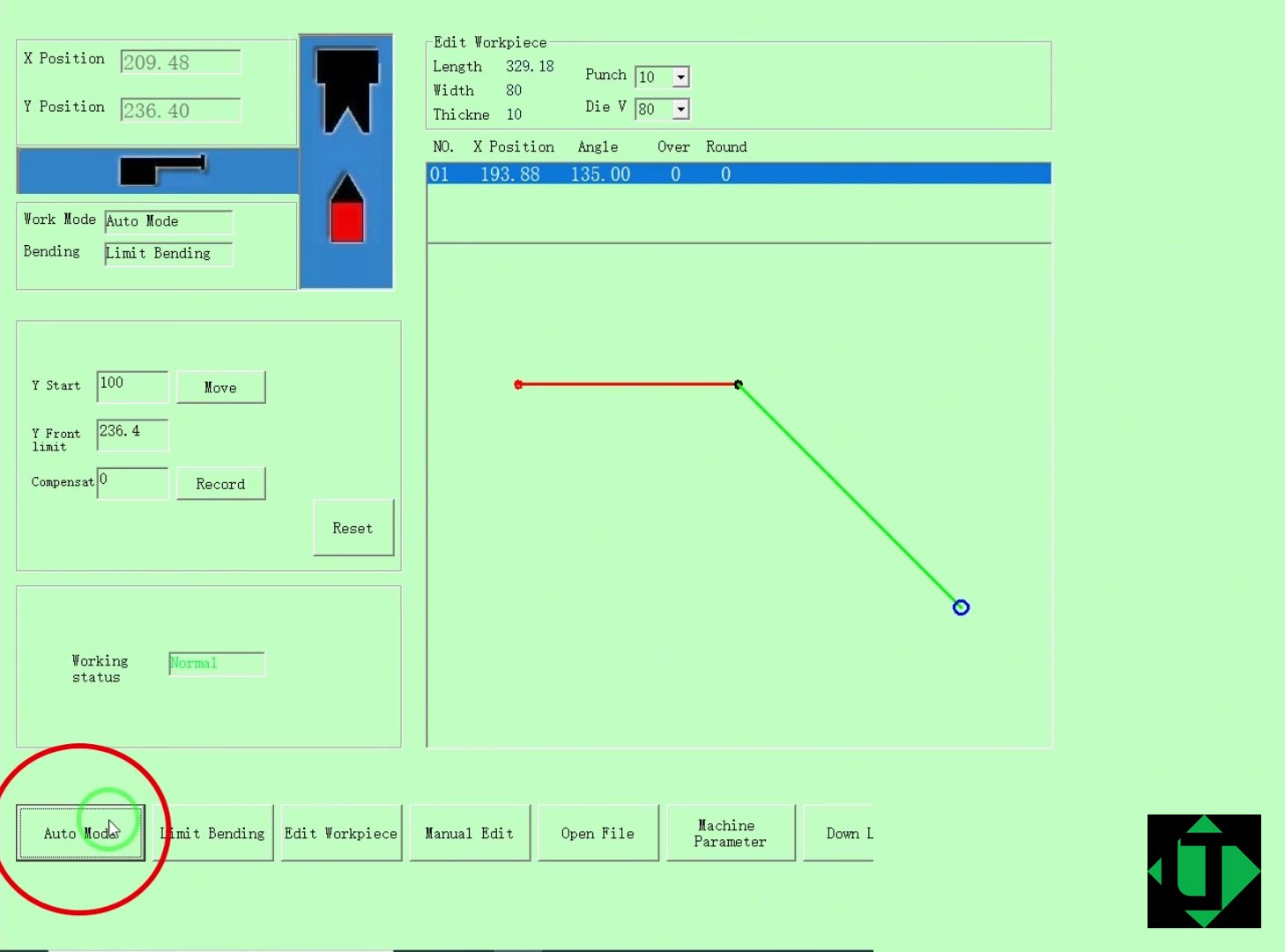
Die starting position
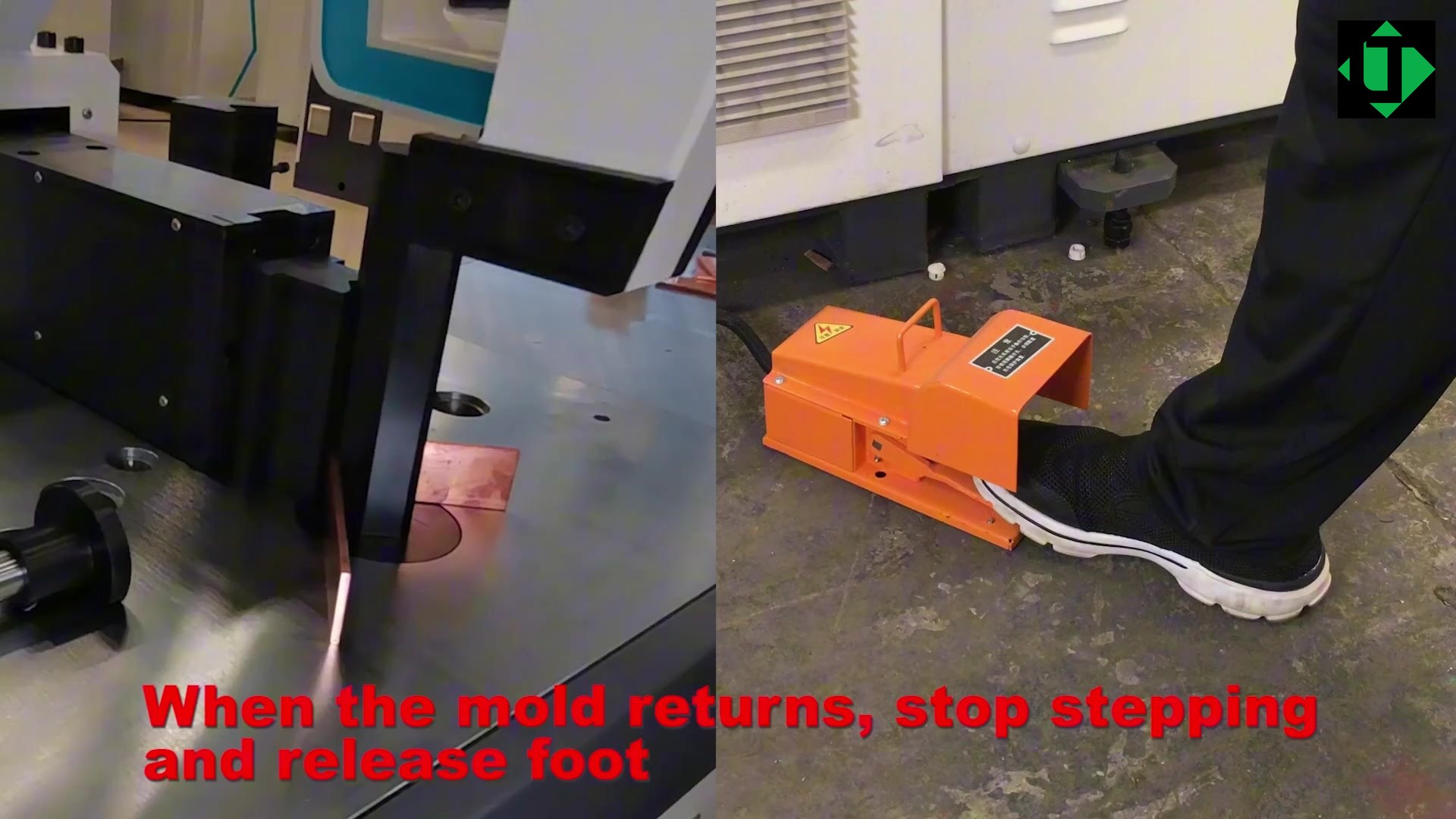
Foot-switch operation: clamp, bend and release
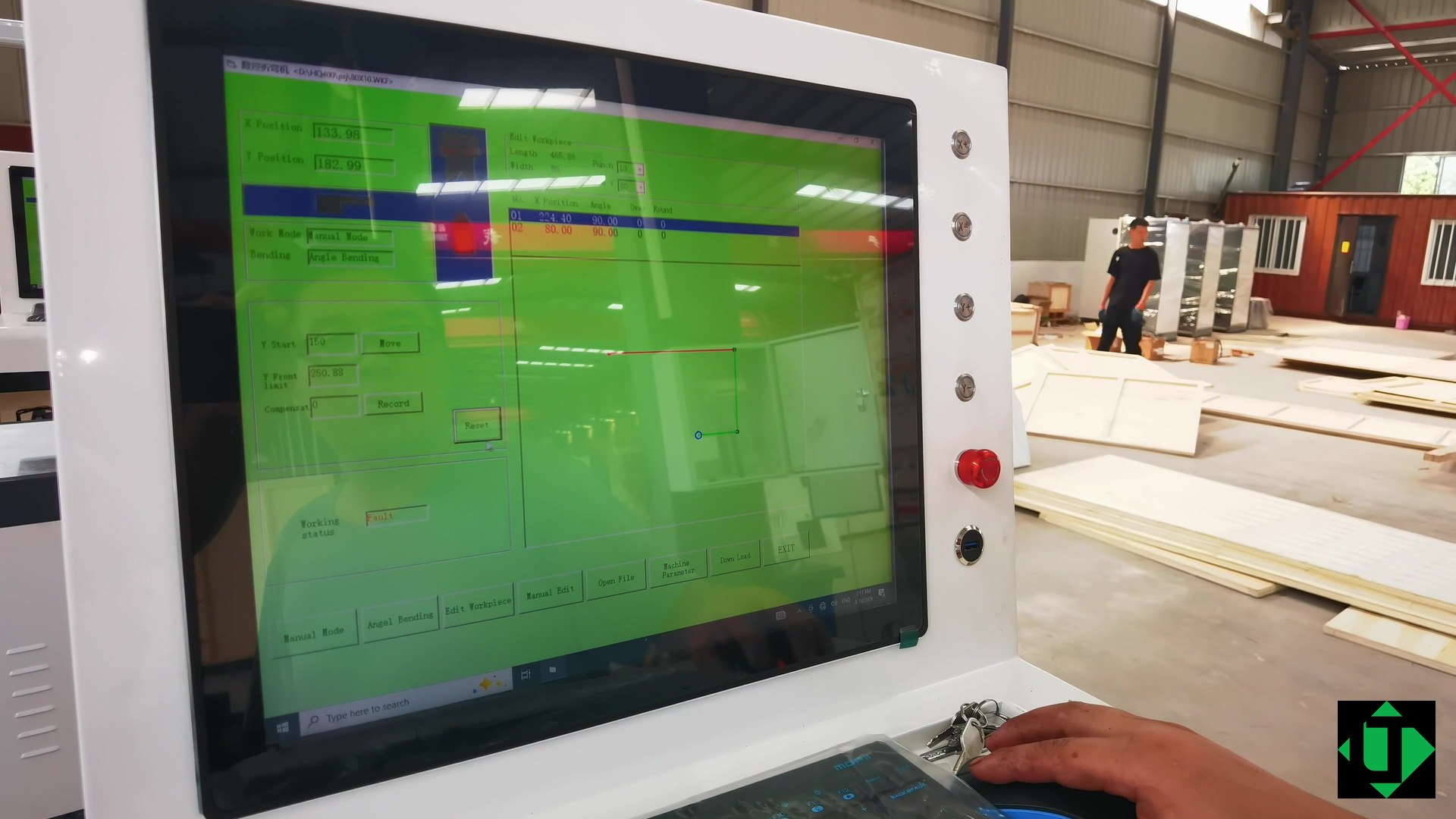
Emergency stop and recovery
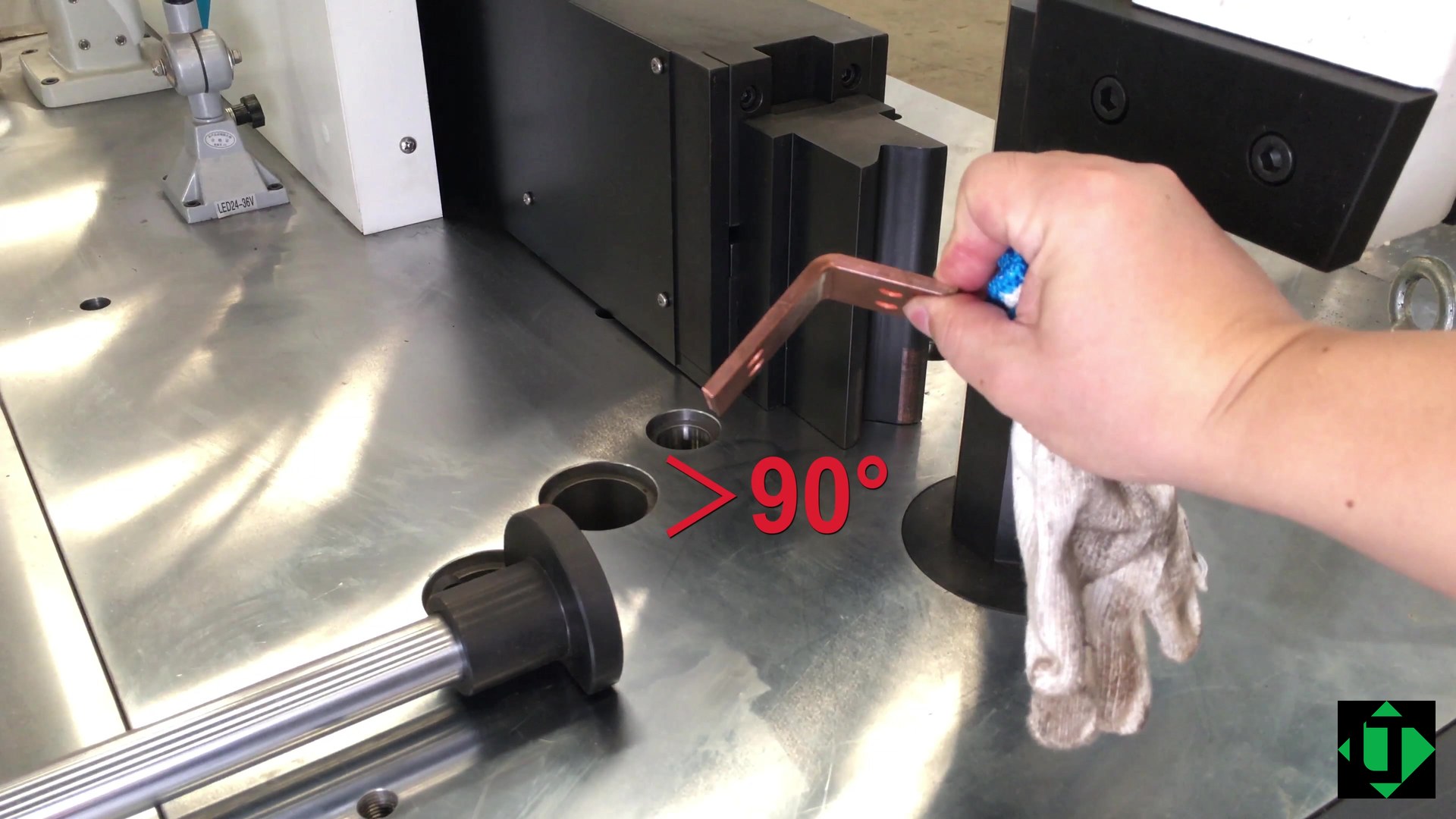
Foot-switch errors and an out-of-angle part
Bending-station maintenance
Why springback governs the result
When the force is removed, the material recovers part of the elastic deformation. Copper and aluminum do not recover the same amount, and temper also matters. That is why an Argentine switchboard shop must keep separate tables and must not copy a copper program onto an aluminum flat. The published ±1° / ±0.5° angle is verified at FAT, not assumed.
Flat and edge bending in the switchboard
Flat bending handles most L, U and Z forms inside a switchboard or cubicle. The more demanding edge bend has published envelopes of 10×100 mm on 303U-3-C and 12×120 mm on 503U-3-C and 803U-3-C. Bends with spacing under about 40 mm need engineering review before production.
From first article to an IRAM switchboard batch
Correct operation does not end at the press stroke. Parts must be measured, kitted for the same switchboard, and a short run recorded if the drawing will be repeated or exported within Mercosur. FAT should include bends from the real drawing, not only a generic demonstration.
Frequently asked questions
Does the HMI define the final angle?
No. The HMI commands the stroke and the recipe. The final angle is the one measured on the part, after springback.
Can copper and aluminum be bent on the same station?
Yes, with separate compensation tables and, if needed, different tooling practices. The first article must always be tried.
What if the bend is off tolerance?
Stop the run, review the die, the datum and the springback table, and do not assemble the switchboard with that bar. Floor rework costs more than a new first article.
How to request a quotation
For a quotation, send drawings, material (copper or aluminum and temper), maximum width × thickness, the hole and bend list, tolerances and supply voltage to [email protected] or WhatsApp +86 13853146766. More information: https://www.busductmachine.com/.