English
 Português
 Español

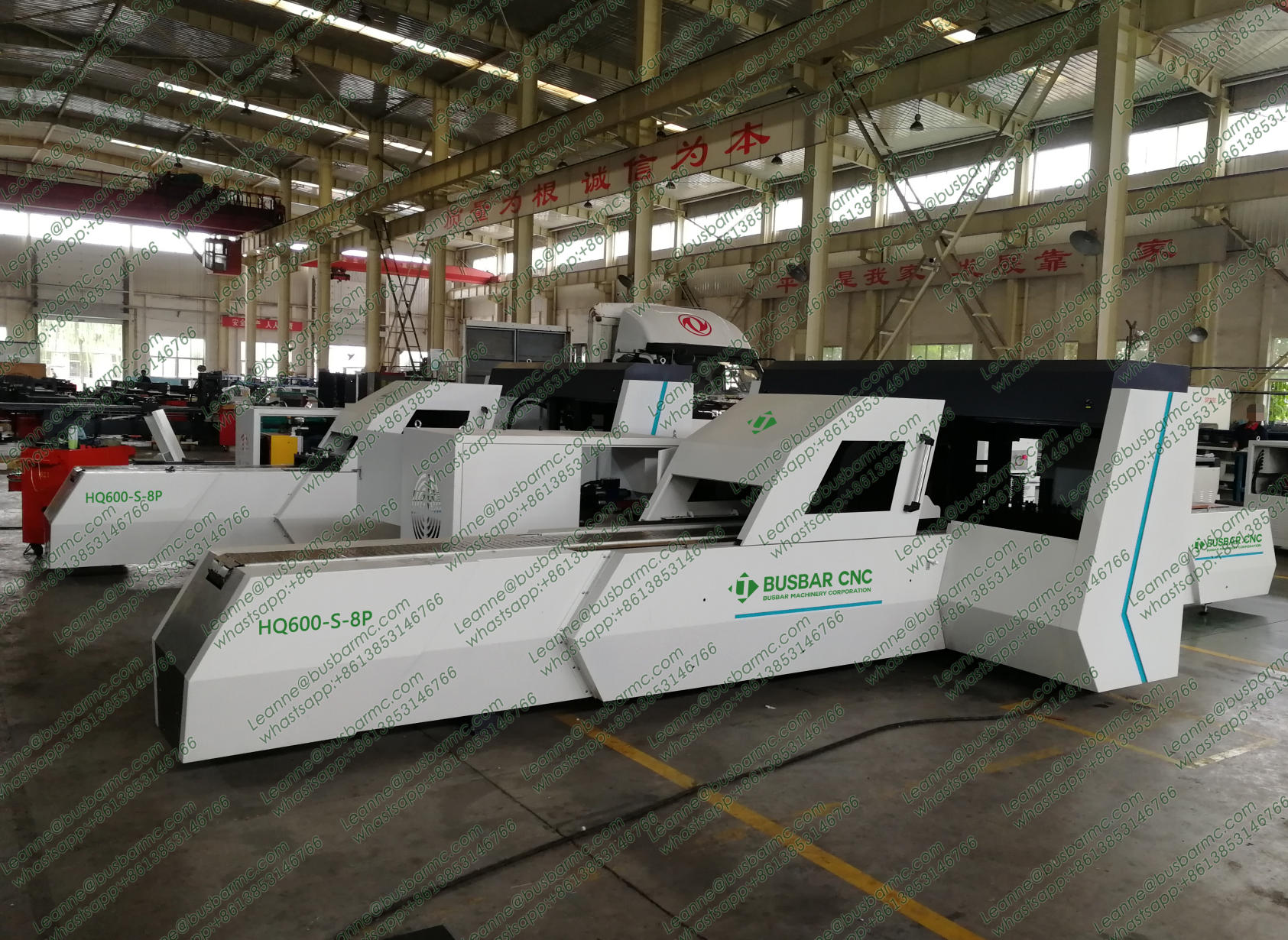
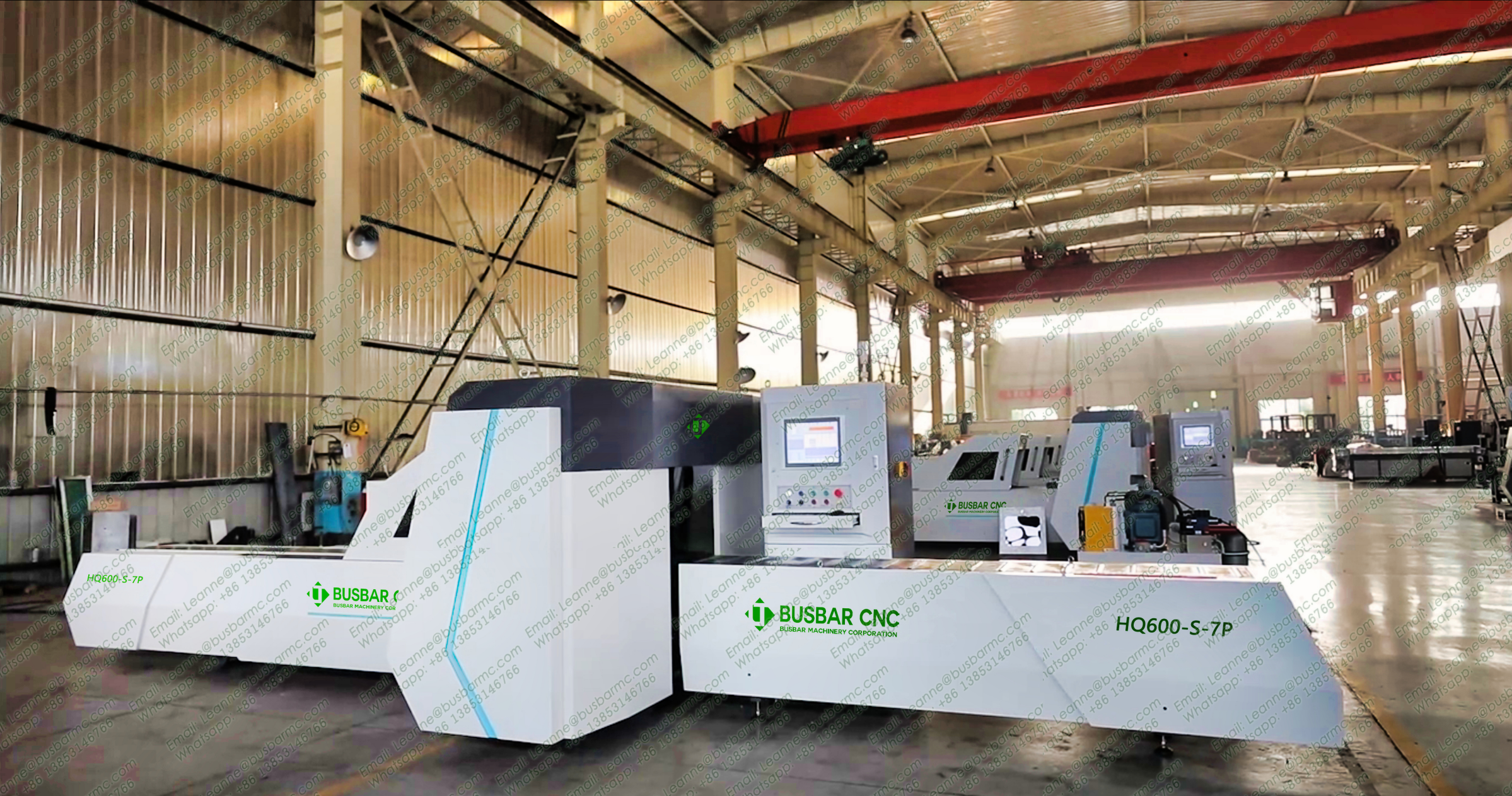
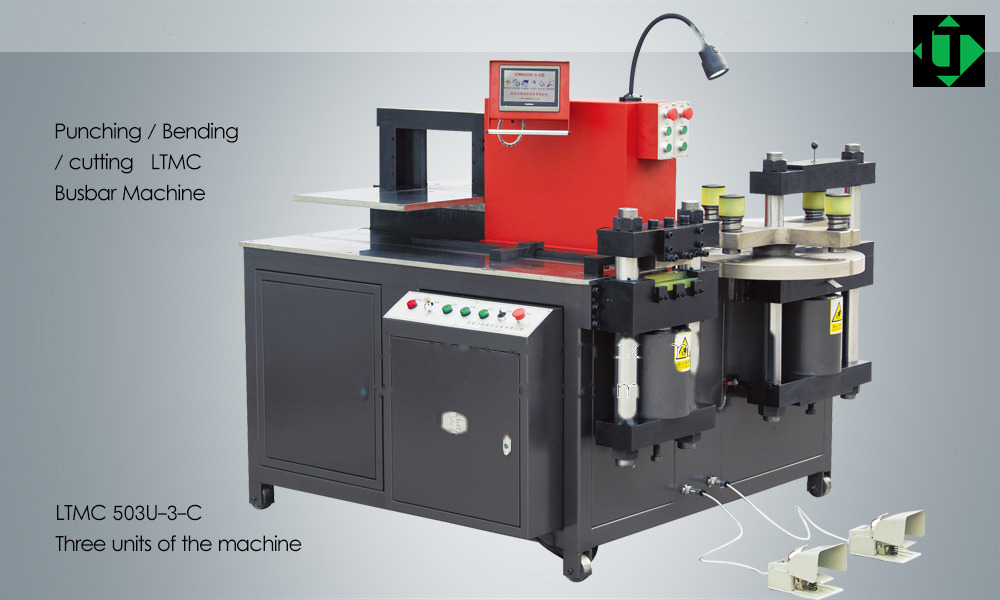
Quick answer: a copper busbar machine may be one integrated 3-in-1 (LT 303U-3-C, 503U-3-C or 803U-3-C) or a set of dedicated punch, shear and bend stations. Start from the finished-part drawing: material and temper, width × thickness, holes, bends and tolerances. Catalogue max size does not prove every operation on every geometry. Compare routes by complete cycle time, tooling, handling, first-article yield and FAT evidence.
Copper applications that drive machine choice
In an Argentine switchboard, transformer or distribution shop, copper appears as flats for main bars, tap-offs, links and terminals. The range of widths, thicknesses, oblong holes and L, U or Z bends is what sizes the machine, not a single force figure.
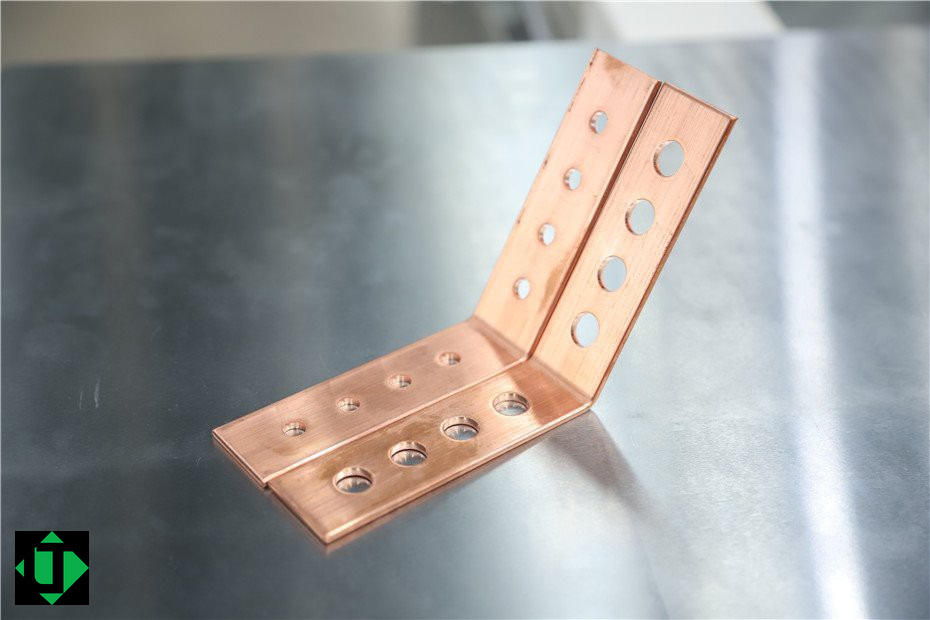
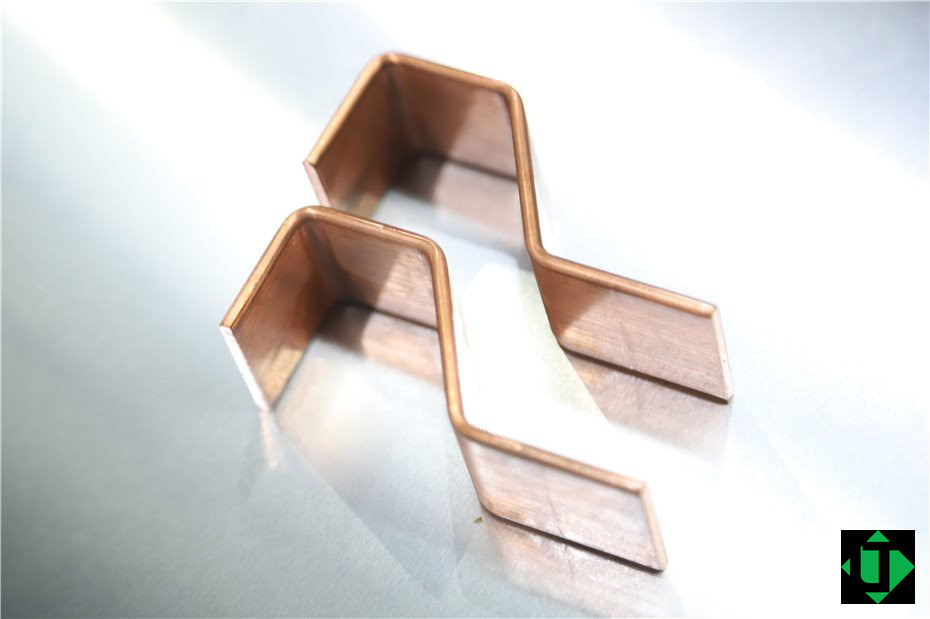
Process route options
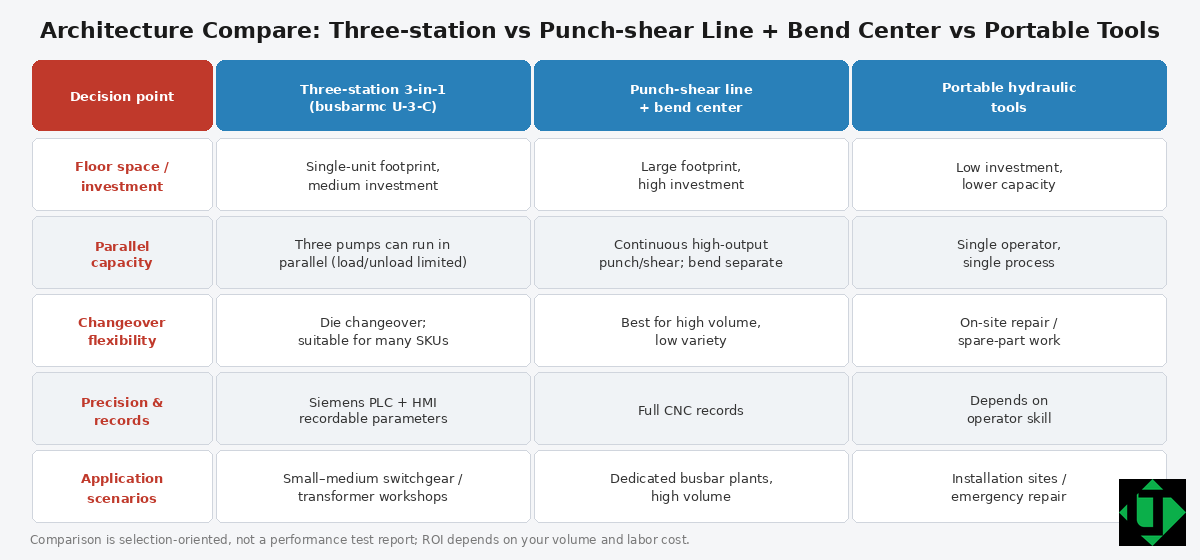
- Hydraulic 3-in-1: mixed copper kits and limited floor space, common in Buenos Aires, Córdoba or Rosario shops.
- CNC-assisted 3-in-1 or HMI recipes: recurring copper drawings.
- Dedicated stations: when one process (for example, edge bending only) concentrates the volume.
Tooling that actually defines copper capability
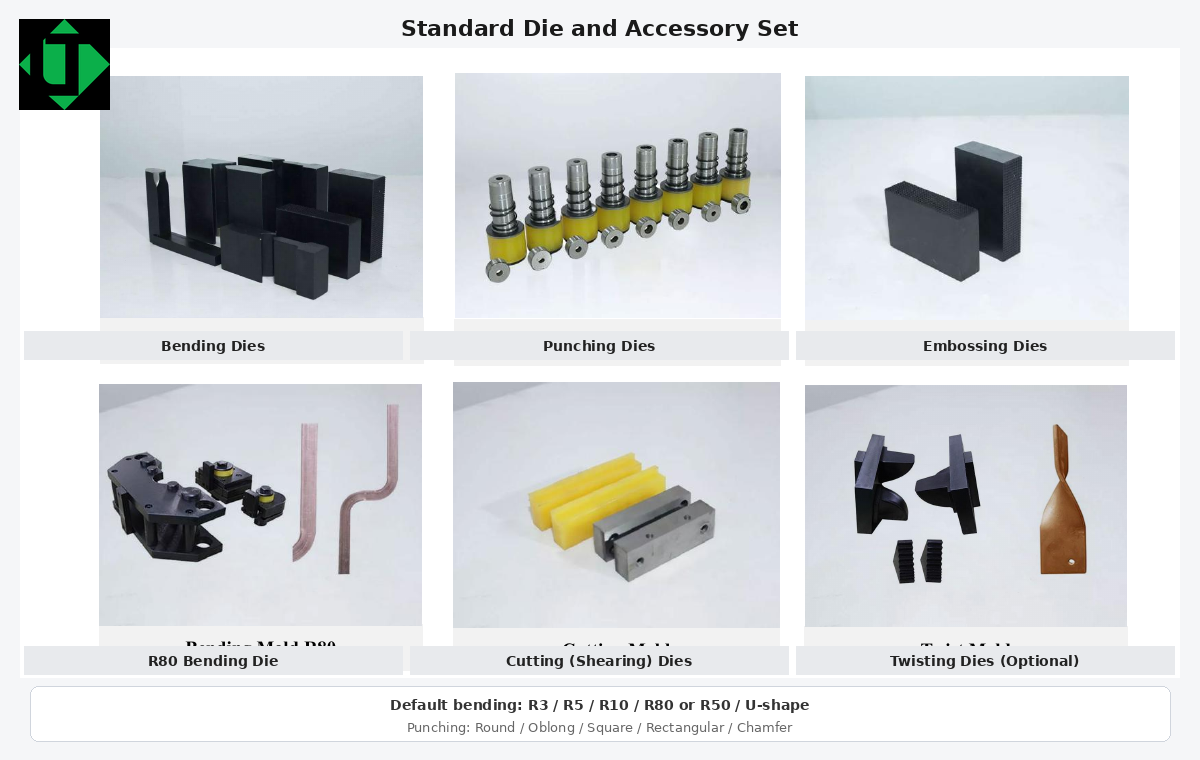
- Punch: round and oblong families; published ranges Φ4.3–25 / 30 / 34 mm by model.
- Shear: blades and clearance for the copper temper.
- Bend: R3, R5, R10, R80 (or R50) radii and U-dies; flat and edge modes on the Siemens HMI.
Model card: size the copper envelope
| Model | Nominal force (kN) | Punching diameter (mm) | Max thickness / width (mm) | Max horizontal bend (mm) | Max vertical bend (mm) | Pump power |
|---|---|---|---|---|---|---|
| 303U-3-C | 300 | Φ4.3–Φ25 | 12 / 150 | 150 / 12 | 10×100 | 3×4 kW |
| 503U-3-C | 500 | Φ4.3–Φ30 | 16 / 200 | 200 / 16 | 12×120 | 3×5.5 kW |
| 803U-3-C | 800 | Φ4.3–Φ34 | 20 / 250 | 250 / 20 | 12×120 | 3×5.5 kW |
Figures come from the public LT / LTMC tables for 303U-3-C, 503U-3-C and 803U-3-C. Thickness class must always be confirmed together with width, hole and bend geometry, and FAT samples. Published angle tolerance: ±1° / ±0.5° (verify on the offer and FAT). Usual export voltage: 380 V / 50 Hz; other voltages (400 V 60 Hz, 415 V 50 Hz, 220 V 60 Hz) are declared on the order. Argentine workshops typically run 380 V / 50 Hz.
In short: 303 ≈ 12×150 mm / Φ25, 503 ≈ 16×200 mm / Φ30, 803 ≈ 20×250 mm / Φ34. The 12, 16 or 20 mm max thickness must always be read together with width and bend limits on the offer.
How to compare output fairly
Ask each route to run the same copper drawing, the same die set and the same FAT criteria. Cycle time should include tool change, handling and inspection, not just the press stroke.
RFQ package for copper machines
Include material and temper, maximum width × thickness, hole and bend list, tolerances, monthly volume, voltage (380 V / 50 Hz is typical in Argentine shops), 3-in-1 vs line preference, die package, FAT drawings and Incoterms or installation.
Frequently asked questions
Can one machine cut, punch and bend copper?
Yes. The LT 303U-3-C, 503U-3-C and 803U-3-C 3-in-1 machines integrate the three stations on one frame.
Is nominal force enough to select a copper machine?
No. Force is a capacity gate. Quality is the released part: position, burr, angle and repeatability.
What copper thickness can LT machines process?
Public maxima are 12, 16 and 20 mm on 303, 503 and 803, always together with width and bend limits on the offer.
What should FAT include for copper?
Samples from the real drawing, agreed instruments, measurement of cuts, holes and angles, and a short-run record, not a single part.
How to request a quotation
For a quotation, send drawings, material (copper or aluminum and temper), maximum width × thickness, the hole and bend list, tolerances and supply voltage to [email protected] or WhatsApp +86 13853146766. More information: https://www.busductmachine.com/.