English
 Português
 Español

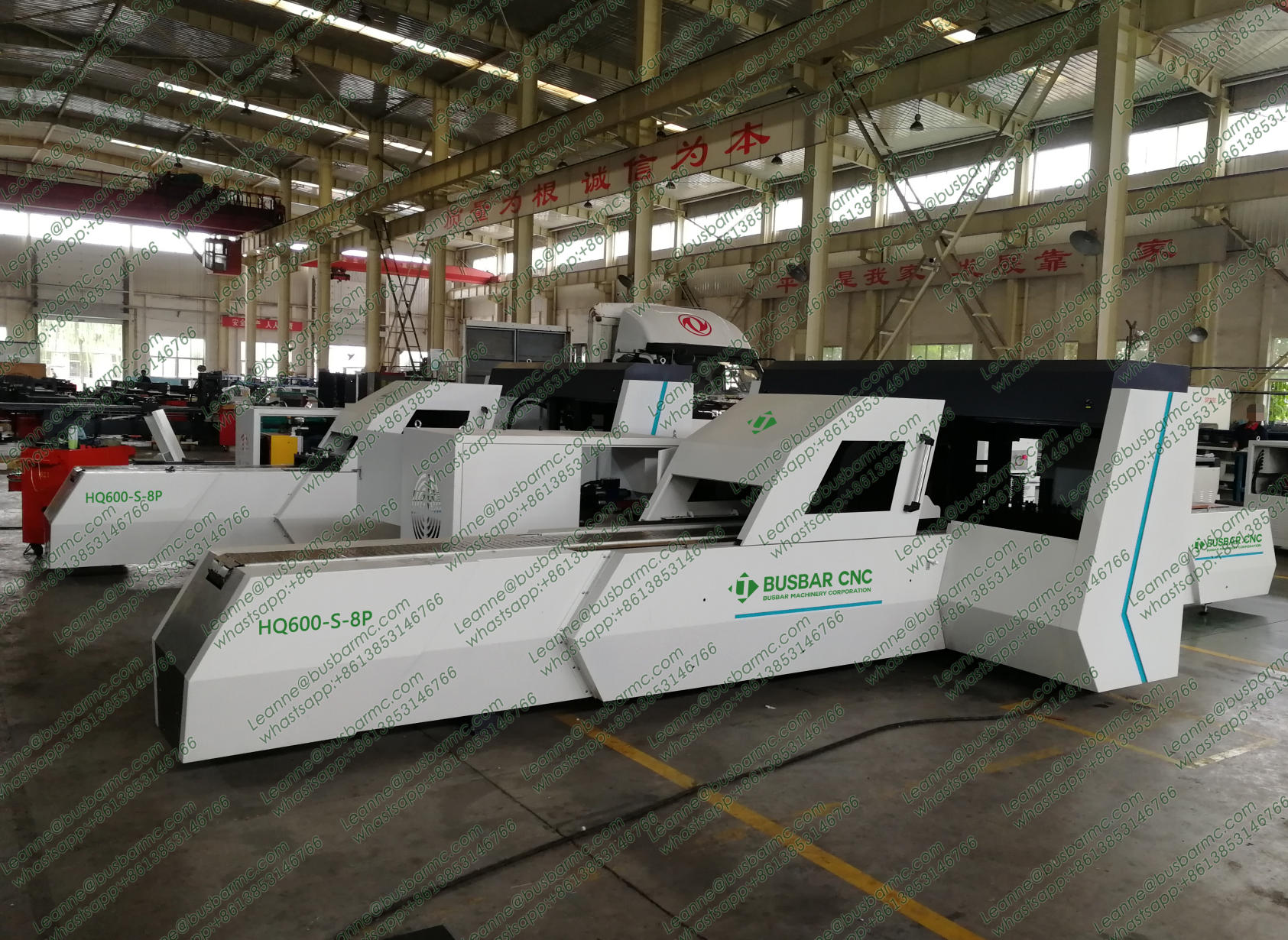
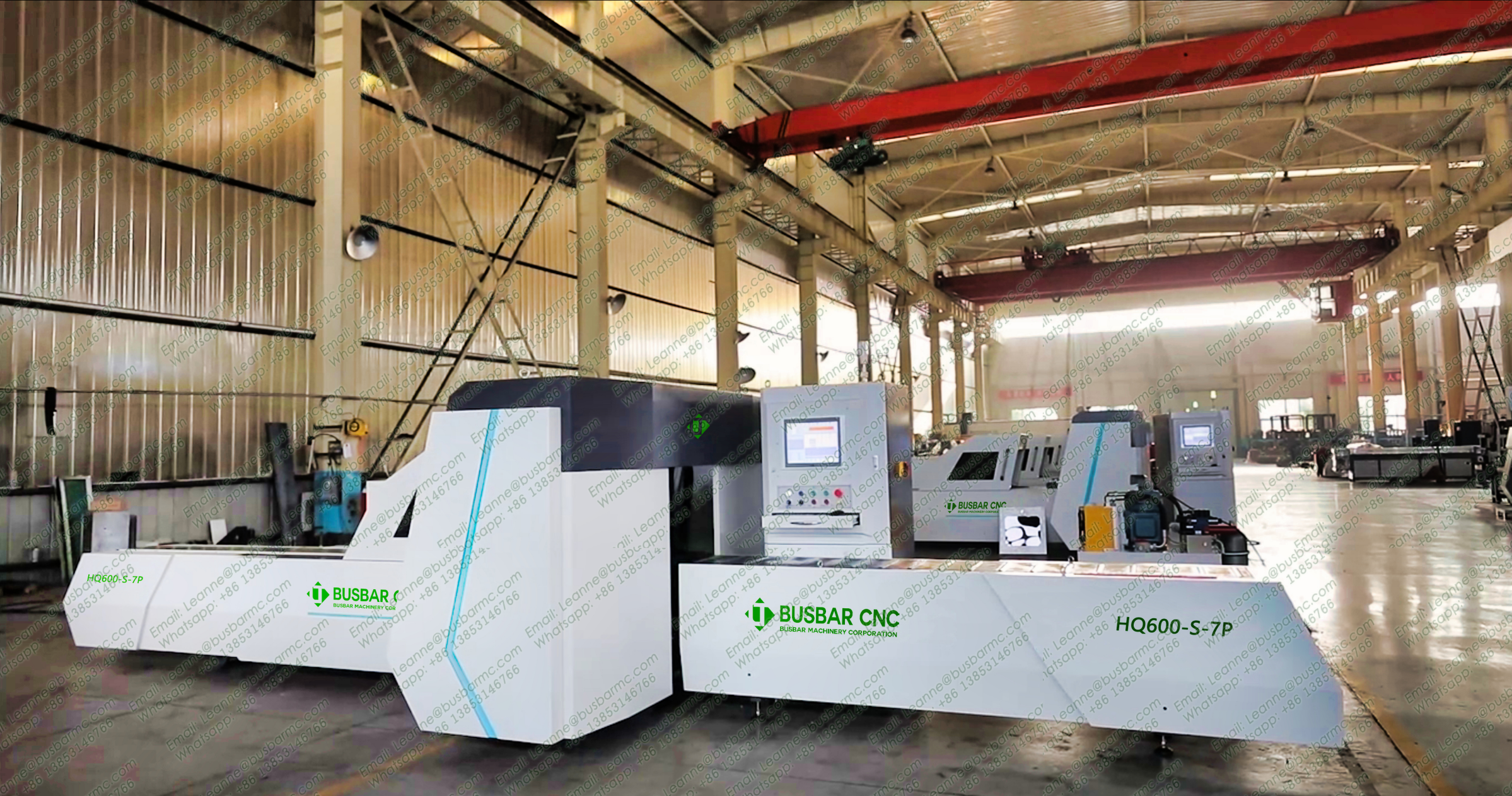
Quick answer: equipment for fabricating switchgear and switchboard busbars is chosen from approved drawings, material and temper, width × thickness, hole and slot layout, bend geometry, tolerances, batch mix and conforming output, not from nominal force alone. A hydraulic LT 303U-3-C, 503U-3-C or 803U-3-C 3-in-1 covers mixed work in many Argentine shops; capacity is proven with samples and FAT.
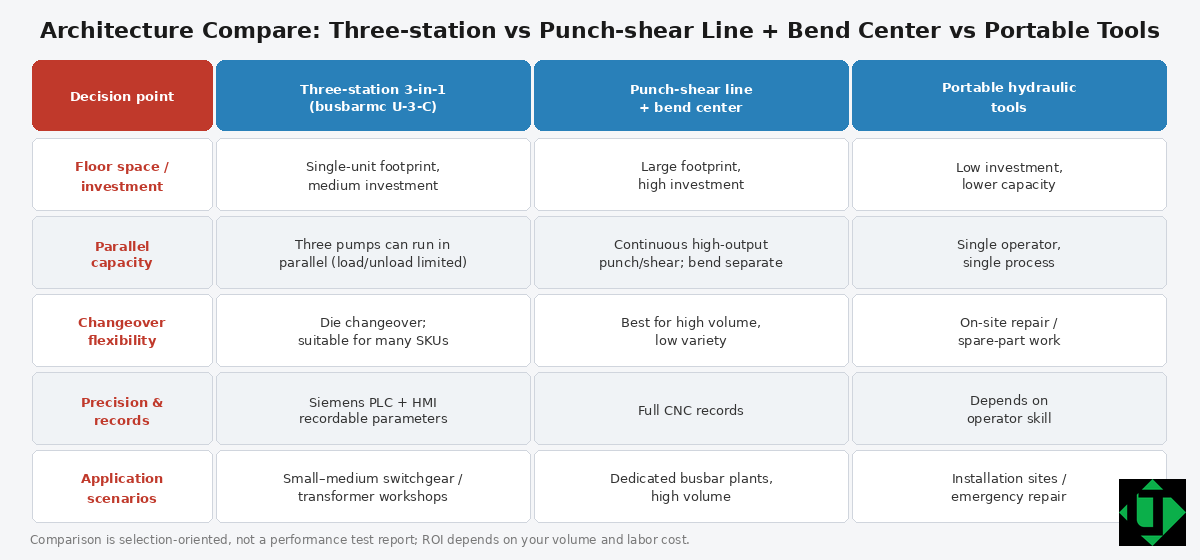
Operations required for switchboard and cubicle busbars
A busbar for LV/MV switchboards or cubicles, built to IRAM, IEC 61439 and AEA practice, typically needs cut-to-length, punching of holes or slots, and flat or edge bending. The machine alone does not set electrical clearances or assembly tests: that stays with the switchboard design. The machine must deliver a part that fits that design, with burr and deformation under control.
Configuration map for a switchboard shop
- Hydraulic 3-in-1 or separate hydraulic stations: mixed batches, limited floor space, typical of shops in Buenos Aires, Córdoba or Rosario.
- 3-in-1 with HMI recipes or servo assistance: recurring drawings and less first-article scatter.
- A dedicated programmable bender: when bending (especially edge bends or short legs) is the bottleneck.
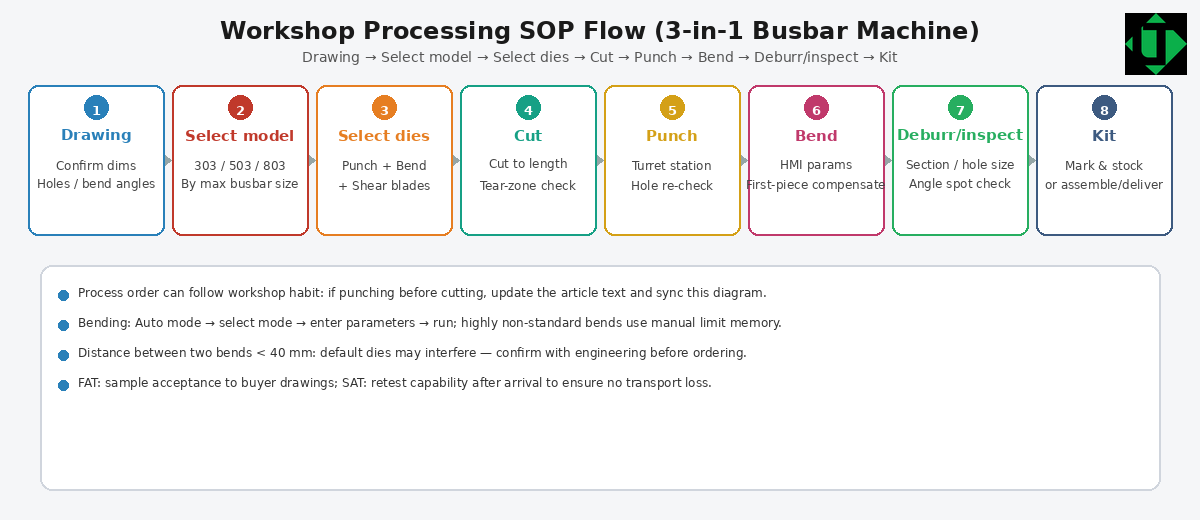
Why an LT 3-in-1 fits many panel builders
An Argentine switchboard or transformer builder rarely makes only one busbar type. A 3-in-1 concentrates punch, cut and bend on one frame, with independent pumps that allow simultaneous work when staffed. That cuts moves between machines and simplifies shipping (for example, arrival via Buenos Aires, Rosario or Zárate) compared with a three-machine line.
| Model | Nominal force (kN) | Punching diameter (mm) | Max thickness / width (mm) | Max horizontal bend (mm) | Max vertical bend (mm) | Pump power |
|---|---|---|---|---|---|---|
| 303U-3-C | 300 | Φ4.3–Φ25 | 12 / 150 | 150 / 12 | 10×100 | 3×4 kW |
| 503U-3-C | 500 | Φ4.3–Φ30 | 16 / 200 | 200 / 16 | 12×120 | 3×5.5 kW |
| 803U-3-C | 800 | Φ4.3–Φ34 | 20 / 250 | 250 / 20 | 12×120 | 3×5.5 kW |
Figures come from the public LT / LTMC tables for 303U-3-C, 503U-3-C and 803U-3-C. Thickness class must always be confirmed together with width, hole and bend geometry, and FAT samples. Published angle tolerance: ±1° / ±0.5° (verify on the offer and FAT). Usual export voltage: 380 V / 50 Hz; other voltages (400 V 60 Hz, 415 V 50 Hz, 220 V 60 Hz) are declared on the order. Argentine workshops typically run 380 V / 50 Hz.
Selection and FAT for a switchboard RFQ
- Start from approved drawings and the hardest width × thickness, hole and bend case.
- Agree a FAT sample set (first, middle and last of a short run).
- Confirm voltage (in Argentina typically 380 V / 50 Hz; other voltages go on the order) and HMI language.
Frequently asked questions
What equipment does switchboard busbar work need?
At minimum, cutting, punching and bending with capacity for the section and geometries on the drawing. That can be a 3-in-1 or dedicated stations.
Is a 3-in-1 enough for cubicles and switchboards?
In many mixed-batch shops, yes, if the model covers the hardest job and FAT proves it. Very special vertical-bend geometries or short radii may need a dedicated bender.
Flat vs edge bend inside the cubicle?
The drawing decides, not the machine. Edge bending has a tighter published envelope (10×100 mm on 303; 12×120 mm on 503 and 803).
Does the machine set electrical clearances?
No. Clearances and switchboard tests belong to the design under IRAM/IEC. The machine delivers busbar geometry and finish.
How to request a quotation
For a quotation, send drawings, material (copper or aluminum and temper), maximum width × thickness, the hole and bend list, tolerances and supply voltage to [email protected] or WhatsApp +86 13853146766. More information: https://www.busductmachine.com/.