English
 Português
 Español
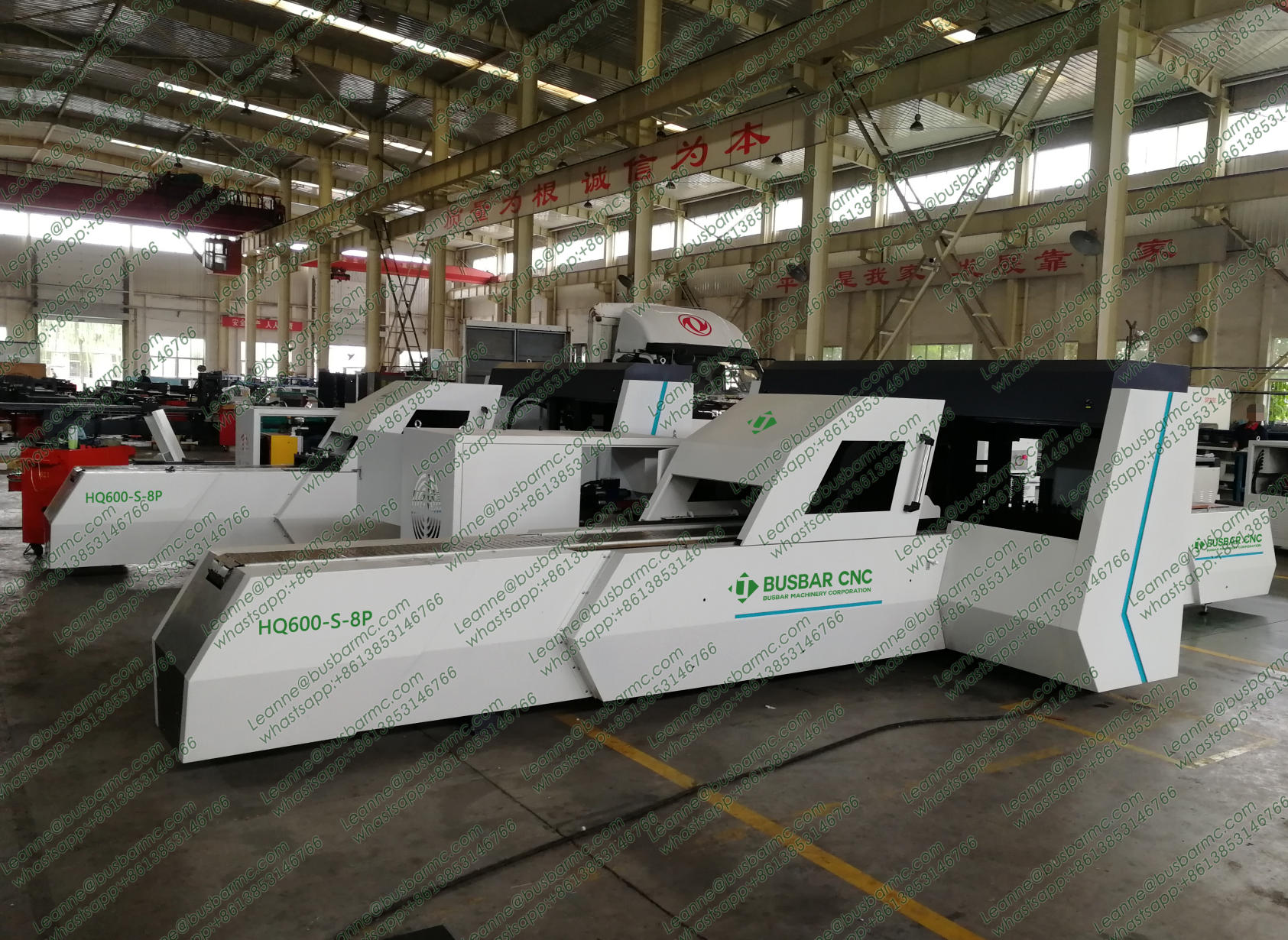
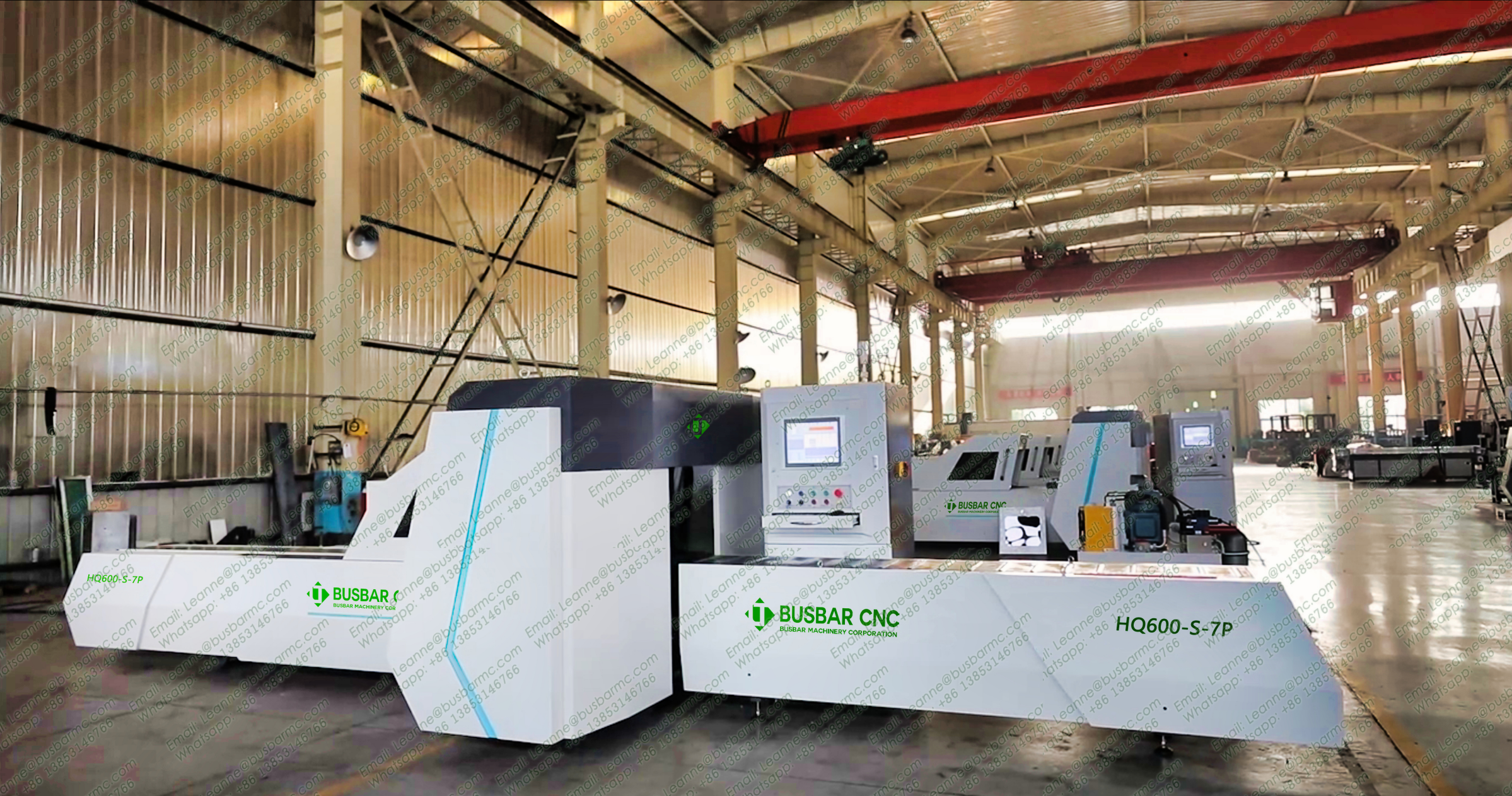
Quick answer: a busbar cutting machine — standalone or as the shear station on an LT 303U-3-C, 503U-3-C or 803U-3-C 3-in-1 — should be chosen from material, finished-length tolerance, squareness, burr limit and edge deformation, not from brochure max thickness alone. A poor cut edge creates rework in punching, bending, assembly and electrical inspection of the switchboard. Prove quality with documented FAT samples, not a single showpiece.
What to confirm before buying
- Width × thickness of the copper or aluminum flats the shop cuts regularly, plus the hardest case.
- Length tolerance, cut squareness and burr limit agreed for switchboards built to IRAM/IEC.
- Instruments, sample quantity, measuring points and inspector for the FAT.
Cutting methods and positioning systems
Hydraulic shearing
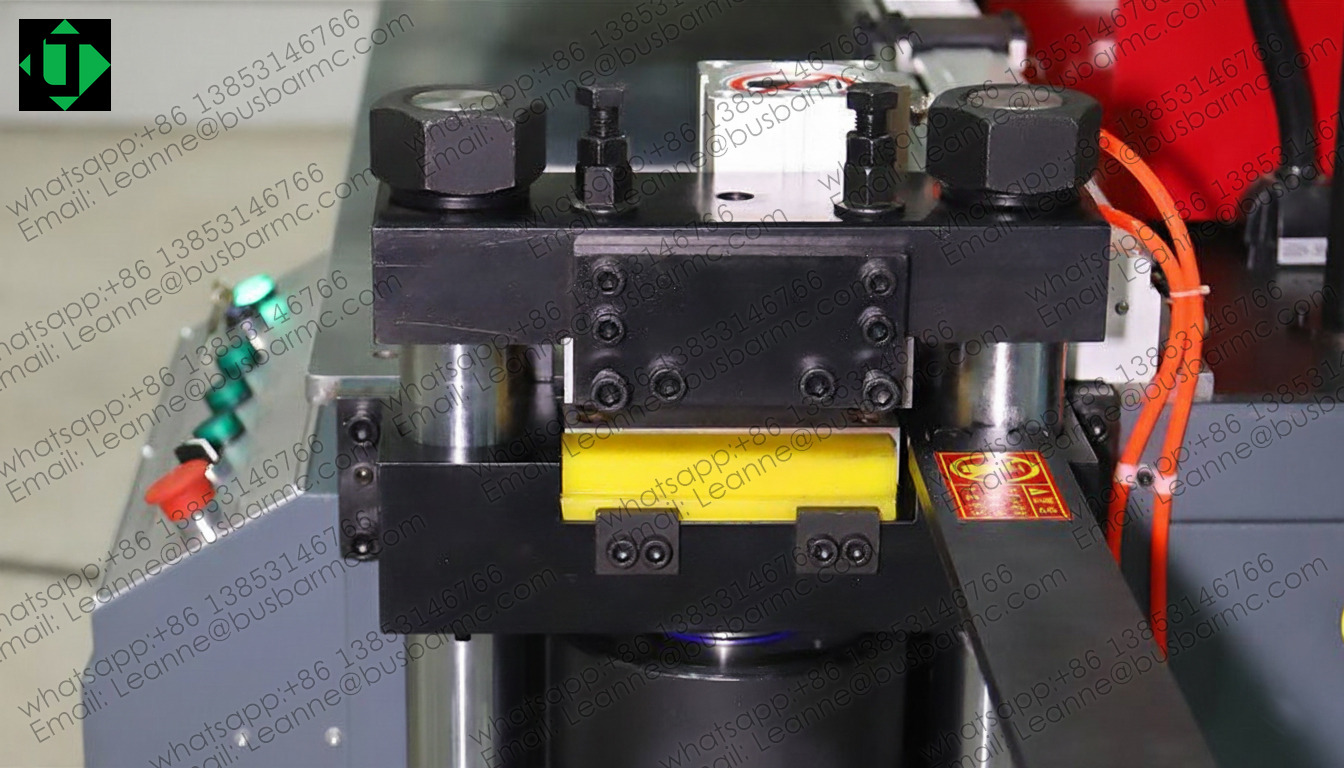
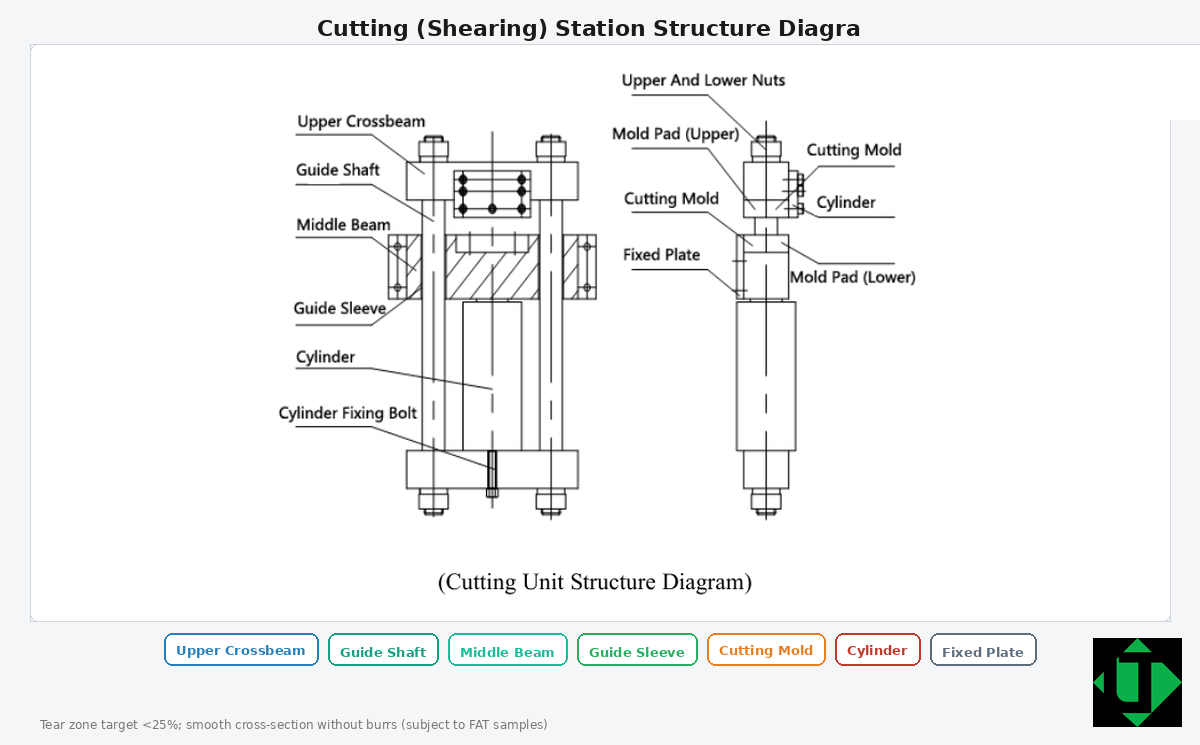
This is the usual method for copper and aluminum busbars in switchboard work: a short cycle with few chips. Edge quality depends on clearance, sharpness, alignment, clamp and support.
Saw cutting
A saw can help on sections or materials where shearing is not the best route, but it introduces chips and a different burr. In a Buenos Aires or Rosario switchboard shop, the 3-in-1 shear usually covers most copper flats.
Manual stop vs servo or CNC positioning
A manual stop can suffice for short runs if the operator is consistent. Servo or CNC positioning reduces length scatter when the drawing repeats, which is common on distribution-board busbar kits.
Finished-cut results to inspect
Before FAT, agree tolerance, instrument, sample quantity, measuring points, owner and acceptance method. For continuous tests, record consecutive parts, not one selected sample. An illustrative criterion is burr under about 25 percent of thickness, as a measurement, not a marketing line.
Where cutting sits on a 3-in-1
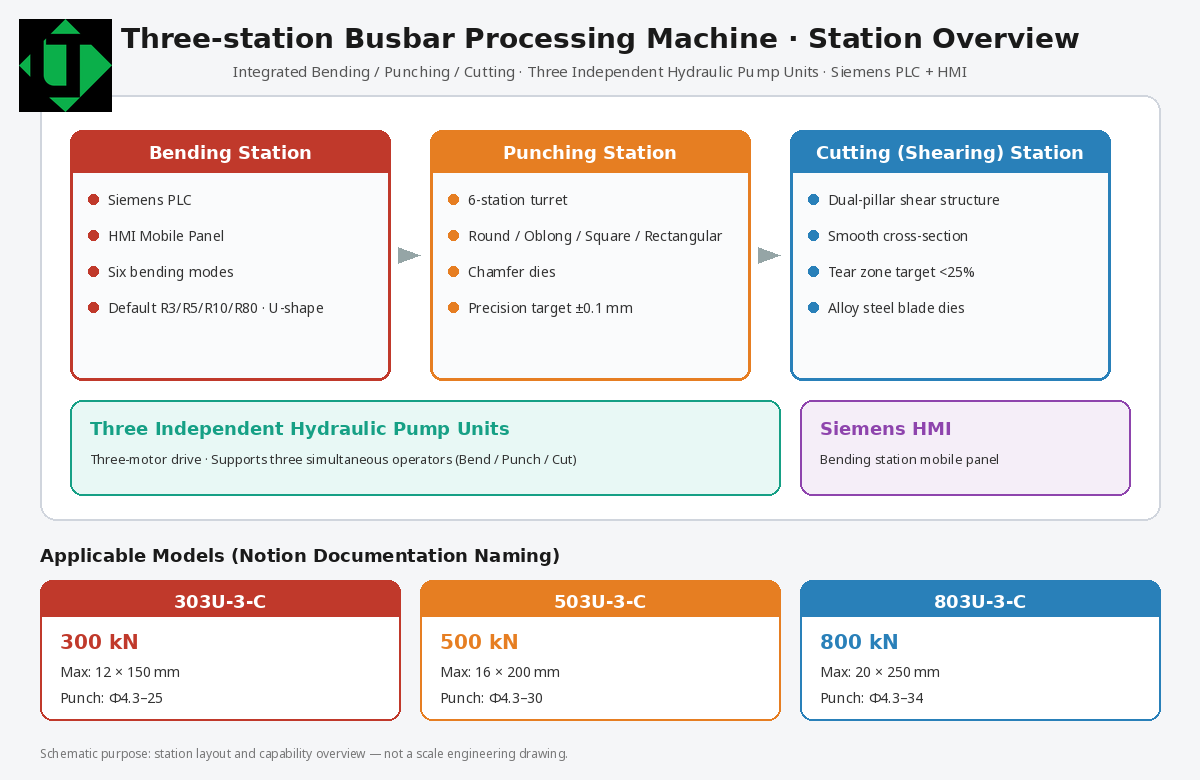
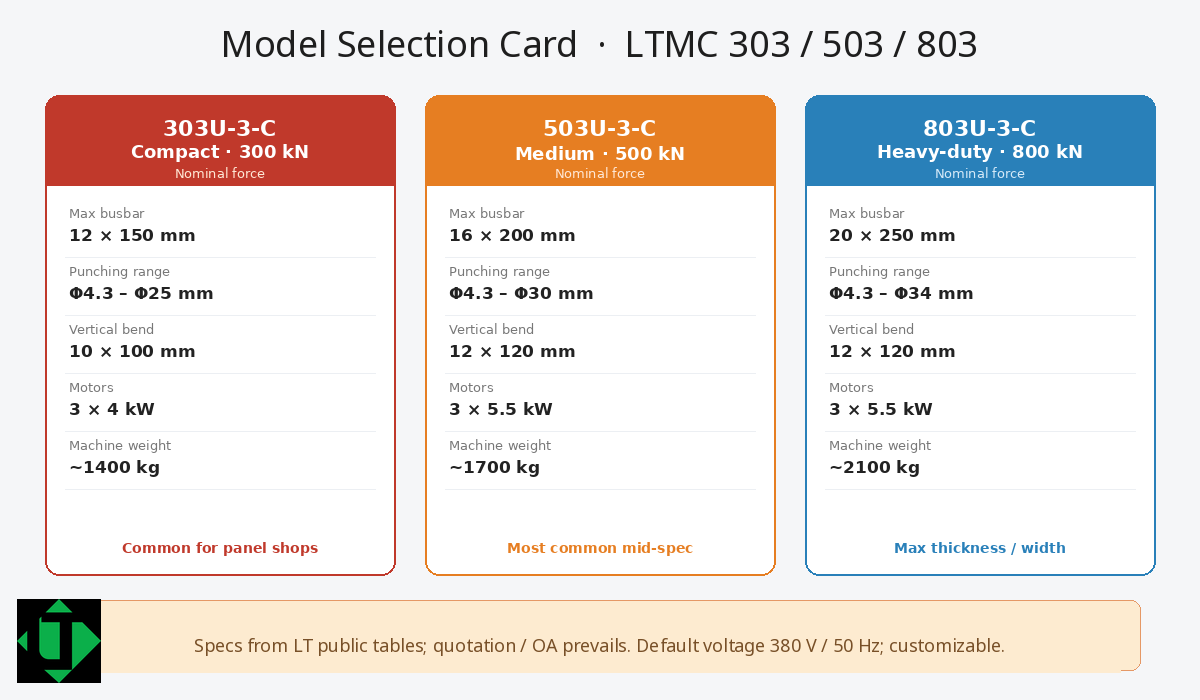
On LT U-3-C machines the shear shares the frame with punch and bend, with independent pump groups so stations can run in parallel when staffing and safety allow. Public cutting classes are 12×150 mm (303), 16×200 mm (503) and 20×250 mm (803); confirm the width wording on the offer.
Buying tips
Require FAT on the shop’s representative section, not only brochure copper. If the machine is headed to an Argentine workshop, declare 380 V / 50 Hz — typical for local industry — and the HMI language. The machine can ship via the ports of Buenos Aires, Rosario or Zárate; that does not replace a receiving cut test.
Frequently asked questions
What is a busbar cutting machine?
It is equipment that shears or, in some cases, saws copper or aluminum busbars to drawing length with a controlled edge.
Shear or saw?
For switchboard copper flats, hydraulic shearing is the usual route. A saw is for section or material exceptions.
Can the shear on a 3-in-1 replace a dedicated cutter?
In most mixed-batch Argentine switchboard shops, yes, if the 303, 503 or 803 class covers the width × thickness and FAT proves it. A dedicated line makes sense when cut-only volume justifies it.
How do I judge cut quality?
By length, squareness, burr and deformation on representative samples, with agreed instruments.
How to request a quotation
For a quotation, send drawings, material (copper or aluminum and temper), maximum width × thickness, the hole and bend list, tolerances and supply voltage to [email protected] or WhatsApp +86 13853146766. More information: https://www.busductmachine.com/.