English
 Português
 Español

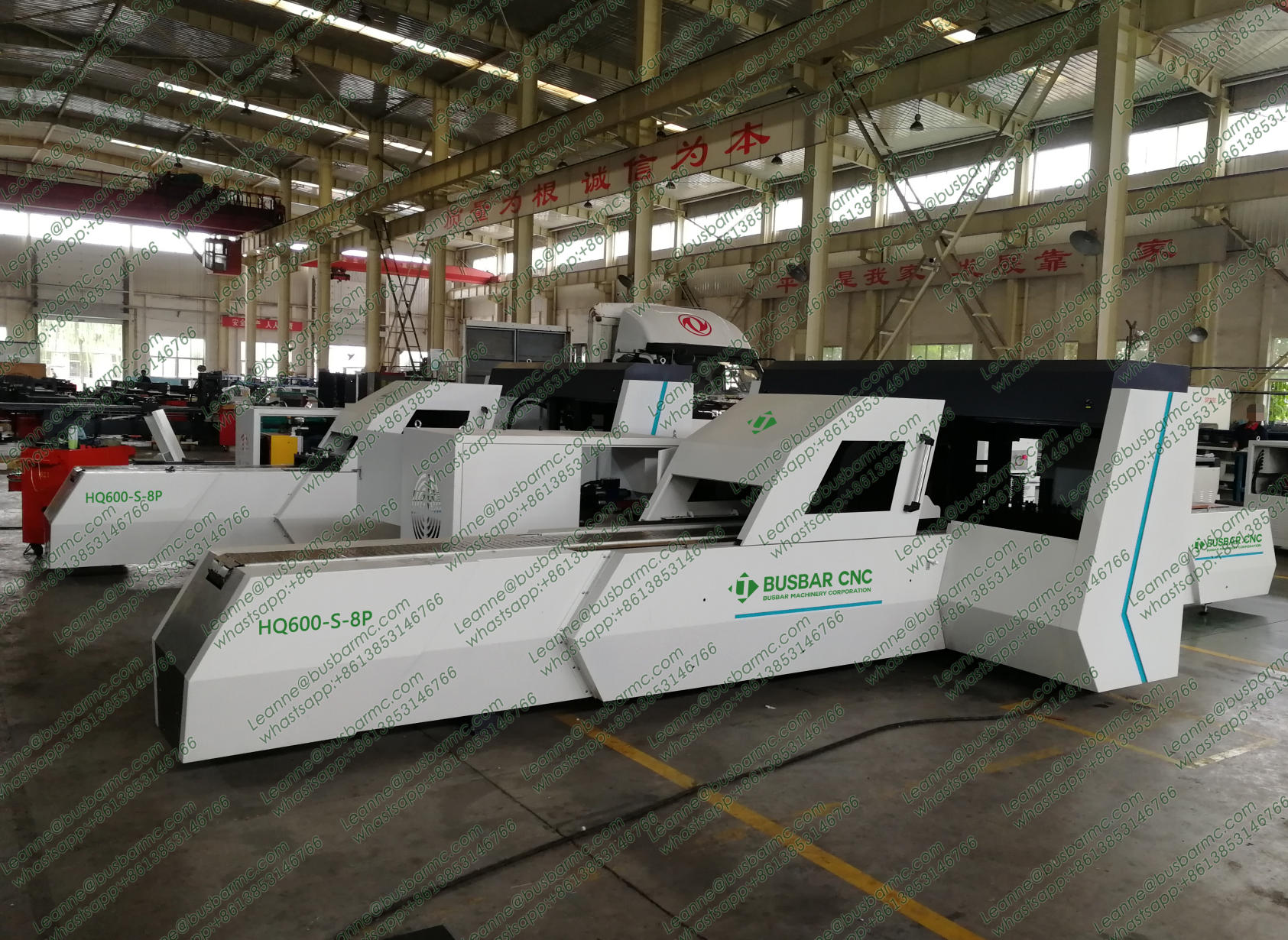
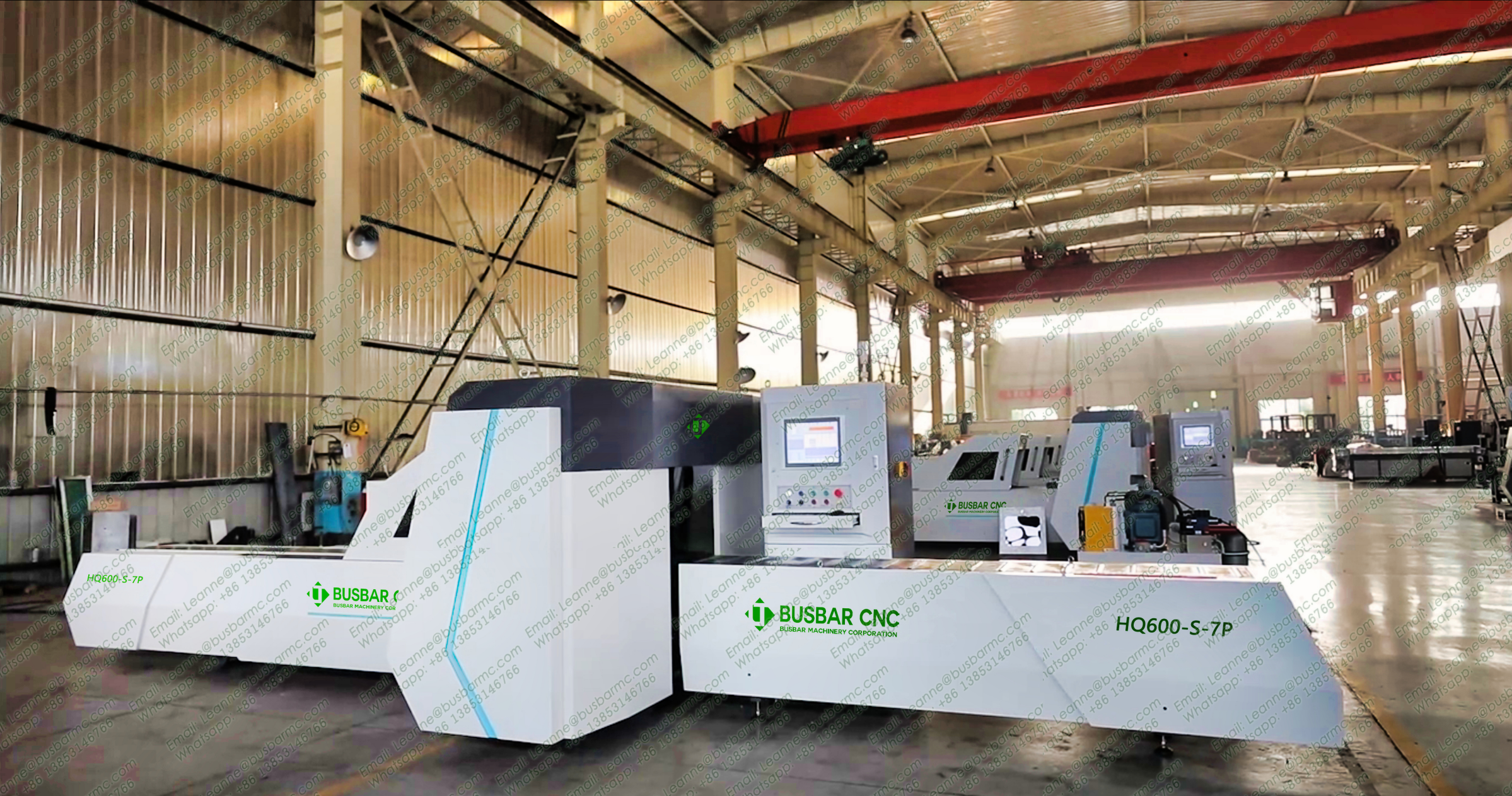
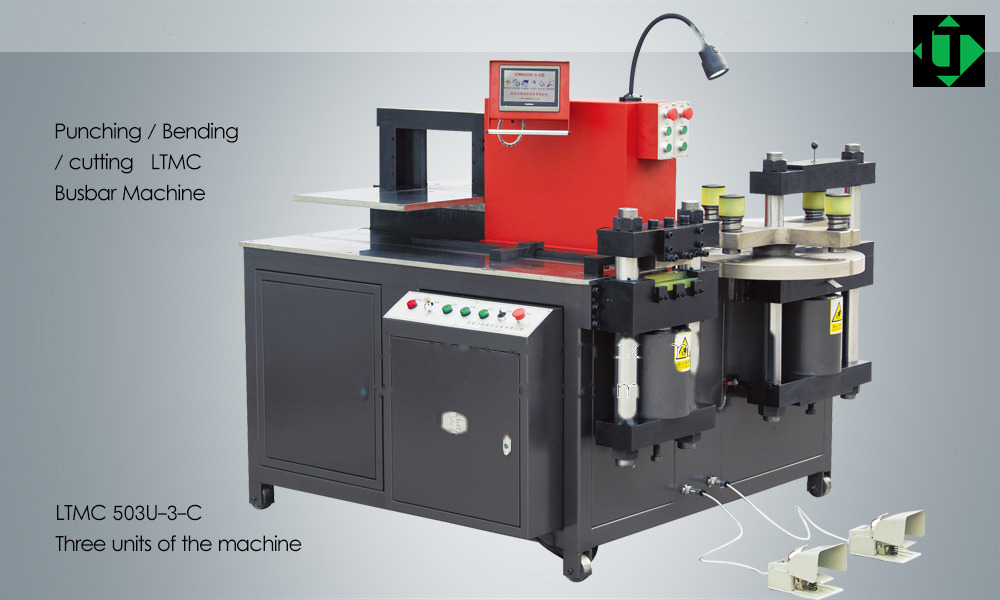
Quick answer: the same hydraulic 3-in-1 machine — for example LT 303U-3-C, 503U-3-C or 803U-3-C — can process copper and aluminum busbars for switchboards and cubicles in Argentina. That does not mean a copper-approved set-up will release the same angle, burr or hole quality on aluminum. When the material changes, re-check die clearance, the springback table and first-article parts.
Why the material changes the set-up in an Argentine workshop
In Buenos Aires, Córdoba, Rosario or Santa Fe, many LV/MV switchboard builders run copper flats as the main conductor and, on some projects, aluminum for weight or cost. Both materials go into assemblies designed to IRAM and IEC 61439, but they do not behave the same on the machine. Copper is usually the tonnage baseline; aluminum needs different clearance, a different minimum inside radius and a different angle compensation.
Punching: clearance and hole quality
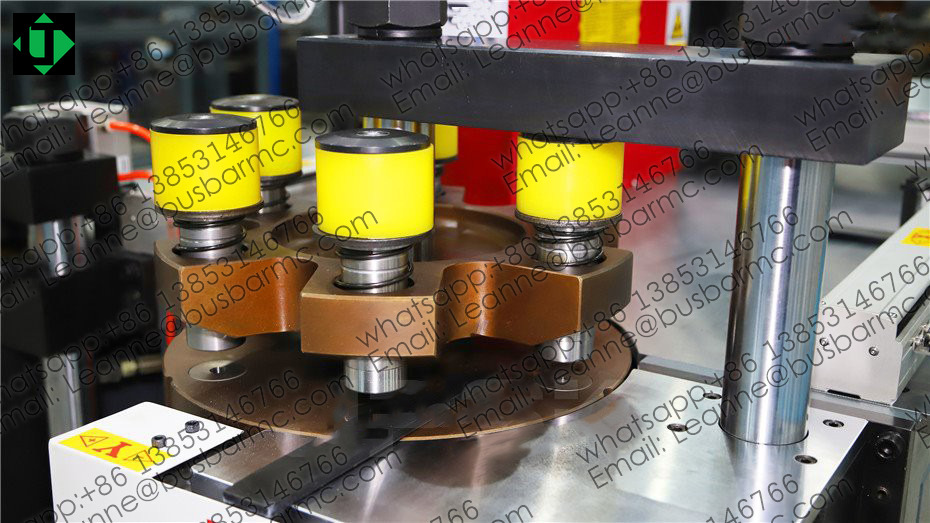
Punching quality is judged by hole position from the drawing datum, size or profile, edge distance, burr and deformation, not by a claimed positioning accuracy alone. On LT 303U-3-C, 503U-3-C and 803U-3-C machines, a multi-station turret covers common round and oblong families when the die, clearance and stripper match the material and temper. Public punching ranges: 303 Φ4.3–Φ25, 503 Φ4.3–Φ30, 803 Φ4.3–Φ34 mm.
Cutting: blades, hold-down and burr
Hydraulic shearing of copper or aluminum flats is a short cycle with few chips, typical in switchboard work. Edge quality depends on clearance, blade sharpness, alignment, clamping and support. Wrong clearance creates burrs and local deformation, which later hinder punching, bending and electrical inspection of the board. An illustrative FAT measurement is burr under about 25 percent of thickness: use it as a measurement, not a slogan.
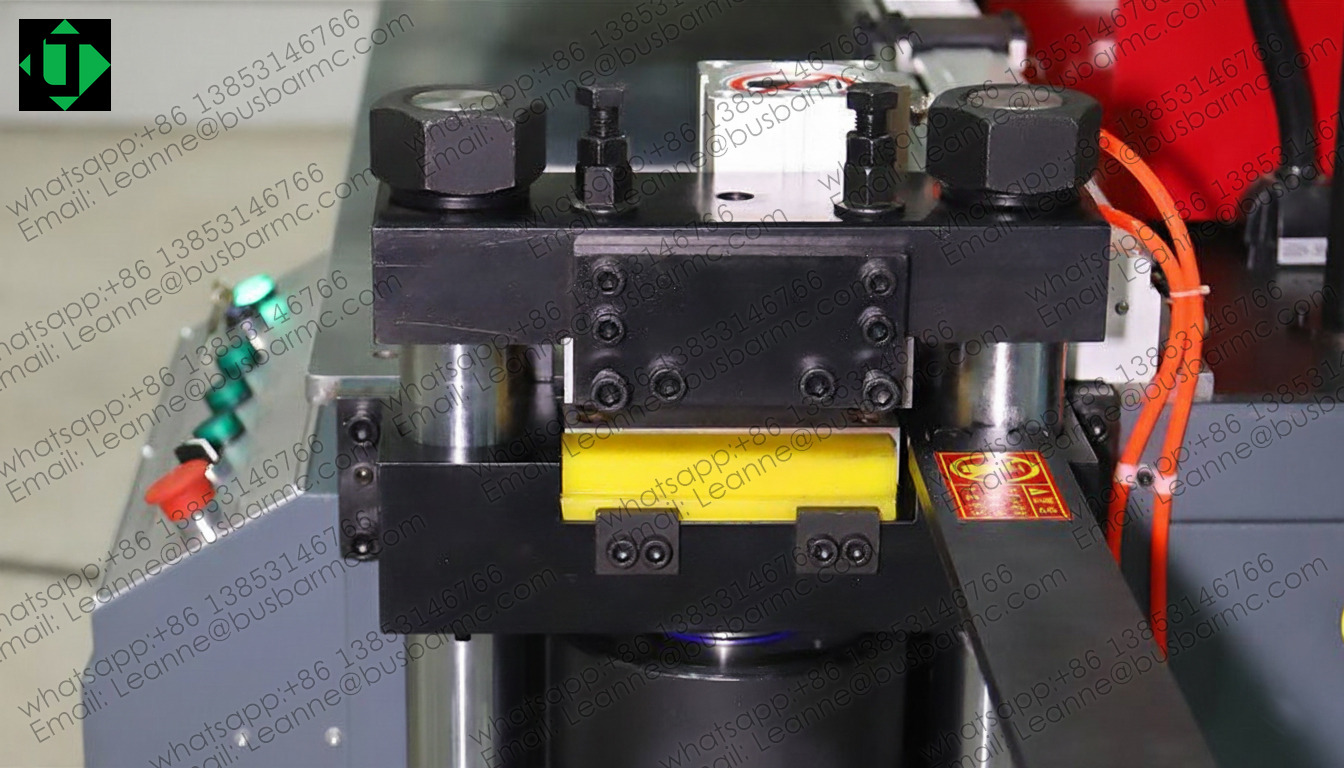
Bending: the springback table must stay material-specific
Aluminum usually needs larger angle compensation and a more conservative minimum inside radius than copper. Do not paste a copper program onto an aluminum bar without a trial bend. Flat bending and vertical (edge) bending have different envelopes: public tables list, for example, 10×100 mm on the 303U-3-C and 12×120 mm on the 503U-3-C and 803U-3-C for vertical bends.
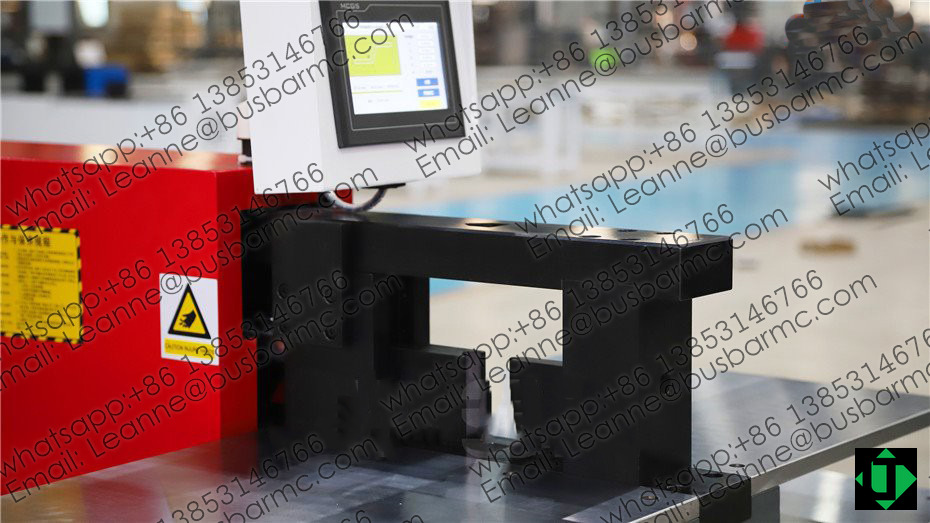
One machine, two materials: practical rules
- Keep separate springback tables and, if needed, separate tooling practices for copper and aluminum.
- Size 303, 503 or 803 on the hardest job (width × thickness, hole and bend), not on the average bar.
- Agree FAT samples in copper and, if the shop uses it, aluminum, with instruments and measuring points defined.
Frequently asked questions
Can one busbar machine process both copper and aluminum?
Yes. LT 303U-3-C, 503U-3-C and 803U-3-C 3-in-1 machines are intended for copper and aluminum busbars, provided capacity, clearance and first-article trials match the material.
Do I need different dies for aluminum?
Clearance, stripper and wear must be reviewed. Many shops can share die families, but a copper-only approved set should not be assumed valid.
Why does aluminum bend differently?
Because of elastic modulus and temper: springback is usually larger and the minimum radius is more demanding. That is why the compensation table must be material-specific.
How to request a quotation
For a quotation, send drawings, material (copper or aluminum and temper), maximum width × thickness, the hole and bend list, tolerances and supply voltage to [email protected] or WhatsApp +86 13853146766. More information: https://www.busductmachine.com/.